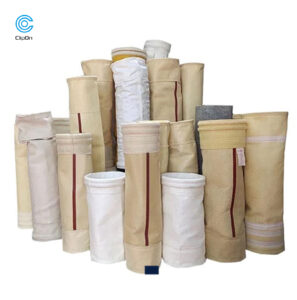
Fiberglass Filter Bags in Cement Kilns: Balancing Heat Resistance with Fine Particulate Capture
In a cement kiln, the air is not just hot—it…
Read More →

At ClipOn, we walk through many cement plants across India. We see the sheer scale of the process—the crushing, the grinding, the kiln firing, and the packaging. Cement is the backbone of our infrastructure, but it is also one of the toughest materials to handle.
Why? Because cement dust is highly abrasive. It acts like millions of tiny diamonds scraping against your equipment. If your dust collection system isn’t designed for this “diamond dust,” your plant will face constant repairs, high energy costs, and unplanned shutdowns.
At ClipOn, we believe in building a “blueprint” for success. Here is how we design filtration systems that don’t just survive in a cement plant—they thrive.
Cement dust is not just fine; it is sharp. When this dust hits a filter bag at high speed, it wears away the fabric. This is why a standard, thin filter bag will fail in a cement plant within weeks.
To design a robust system, you must focus on three areas:
When we help a client design their baghouse or choose replacement bags, we follow a specific technical blueprint.
Before air ever reaches your bags, it should enter a cyclone or a settling chamber. This “pre-separator” spins the air and drops the heaviest, most abrasive particles into a hopper. By removing 60% to 80% of the dust before it reaches your filter bags, you immediately extend the bags’ life by a factor of 2 to 3.
In a cement plant, we rarely use simple felt. We look for high-tenacity, heavyweight needle felts. We often recommend P84 (Polyimide) or PTFE-treated fabrics.
In a high-abrasion zone, the cage is the bag’s best friend. If the bag is loose, it will vibrate and “flutter” against the cage wires every time the system pulses. This vibration creates holes.
A cement plant baghouse needs to be cleaned regularly, but not too much. If you pulse your bags every 30 seconds, you are literally wearing them out with your own cleaning system.
We recommend Demand-Based Pulse Cleaning. Instead of cleaning on a timer, your system should clean based on the Differential Pressure (DP).
Cement production is energy-intensive. A well-designed dust collection system is a major energy saver. When your filter bags are clean and the air flows freely, your ID fans use significantly less electricity.
At ClipOn, we see filtration as a part of the plant’s overall “Efficiency Score.” By using our high-durability bags, you aren’t just saving money on parts—you are reducing your plant’s total carbon footprint.
If you want to optimise your current system, run through this quick list:
Designing a dust collection system for a cement plant is an engineering challenge. It requires an understanding of airflow, material science, and the specific abrasive nature of cement.
At ClipOn, we love these challenges. We’ve spent years refining our products to ensure that, whether you are running a kiln or a packaging line, your air stays clean and your plant keeps moving. We aren’t just selling bags; we are helping you build a more reliable, efficient cement plant.
Ready to rethink your dust collection? Visit us at www.clipon.io. Let’s talk about how we can make your filter bags the last thing you have to worry about this year.
In a cement kiln, the air is not just hot—it…
Read More →
In a clinker grinding unit, the air is thick, hot,…
Read More →
At ClipOn, we talk to many power plant managers who…
Read More →