The Sustainable Bauxite Economy: A master guide to dust mitigation and environmental safety in Jamaica’s alumina sector.
Jamaica is a land of great beauty and rich resources.…
Read More →

The scenario of the South African energy sector, with Eskom as the key player supplying extensive, mostly vertical coal-fired power plants (CFPPs) across the Mpumalanga Highveld, is currently at a turning point under tremendous operational pressure and the very critical mandates of environmental protection. Although CFPPs are the biggest mobile sources of PM, SO2, and NO2 emissions, they account for most of the country’s total electricity generation. Their operations have devastating impacts on nearby areas, which are afflicted with high levels of pollution, and therefore they are in significant debt to health and environmental issues.
The need to adhere to the country’s Minimum Emission Standards (MES), i.e., emission limits on PM, SO2, and NOx gases, as required by the National Environmental Management: Air Quality Act (NEM: AQA), has manifestly envisioned the switch to high-efficiency filters for air pollution control of such a system. Dedicated, effective, and state-of-the-art filtration products, such as modular Bag Filters, have become the perfect solution to this issue.
Furthermore, the Company’s ethos of curtailing air pollution goes hand in hand with the refurbishment of filtration systems by including branded, modern Bay Filters, as we retrofit and supply these customized Bag Filters engineered to meet the unique challenges of South African coal combustion.
The technical difficulties that Eskom’s coal-fired power plants face regarding MES, specifically in PM emissions, are caused by a combination of technological obsolescence and local coal properties.
One of the main goals of the MES is to reduce the emissions of PM, SO2, and NO2. Older plants generally installed ESPs and used them to capture particulates from the flue gas. However, these plants often struggled to meet the increasingly strict PM emission limits (such as 50 mg/Nm3 or lower) mandated by the MES framework.
The ClipOn Advantage: Bag Filters (also known as fabric filters) possess special properties that make them the best choice for ensuring efficient collection of fly ash at PM levels as low as 0.5 mg/Nm3. This is achieved even if the arrangement time of the materials, and thus the resistivity of ash, experiences fluctuations.
A common issue with South African coal is the fact that it poses difficulties during the filtration process:
High Ash Content: Some coal-fired power plants use coal with very high ash content (i.e., up to 42%). This results in various dust loads that the outdated filtration systems find hard to cope with.
Low Sulphur Content (in some areas): In fact, certain types of coal (e.g., that used at the Lethabo Power Station) have a low sulphur content, making the ash more resistant. This, in turn, has a detrimental effect on the traditional ESP and its operation. Although the situation can be improved by adding SO_3, this comes at an extra cost and increased complexity.
Most Eskom stations have already implemented the latest technology by replacing old ESPs with environmentally friendly Bag Filters (in addition to installing them on new available units). These systems, which use a combination of up to 20,000 bags, have considerably reduced PM emissions to levels well within the regulations.
The filter media and system design are selected and proposed based on operating experience with the thermal and chemical conditions encountered in the unique South African boiler environment.
Threat: Removing the bag filter has been a common issue due to rising, often unstable, temperatures in the flue gas stream.
ClipOn Solution: We manufacture products like Fiberglass and PPS (Polyphenylene Sulfide). Fiberglass offers an ideal solution for high-temperature applications, as it can withstand heat, while PPS is highly stable (operable up to 190 °C) and resistant to chemicals released during combustion.
Related Issue: The flue gas is expected to contain PM; however, the presence of $SO_x$ and water vapor can lead to sulfuric acid formation, which may damage standard filter fabrics.
ClipOn Solution: Our filter bags are pre-coated with lime (or a similar alkaline material) to neutralize any initial acid attack, a common practice before startup. We use media, such as PPS or PTFE (Teflon), that are highly chemically compatible and resistant to corrosive environments, so our bags can last their full service life (typically four to five years).
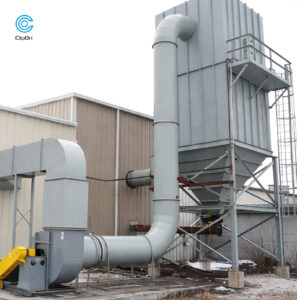
The Pulse Jet Bag Filter, a primary technology used in CFPPs, is unique in being operated through online bag housekeeping. This process involves short bursts of compressed air that clean the bags sequentially, with each bag being addressed individually. As a result, the overall operation remains unaffected and power normalization occurs seamlessly. Our components, such as the precision-engineered filter cages, are effective at ensuring a good seal and supporting the operation of these high-capacity, bulk processes.
The total investment for sustainably reducing emissions continues to rise into the billions of Rand. A feasible alternative to achieve this goal is to comply with the ClipOn company’s quality standards in filters.
Health and Social Impact: The reduction of PM emissions due to the switching of the damaged causes to the new filters, thus cleaning the air from a pollutant widely regarded as a major contributing cause for the occurrence of chronic ailments,-the modern filtration technology practically addresses the severe health impacts faced in the priority areas like Highveld and the like, thereby translating environmental compliance into concrete social benefits.
Reliability: In contrast to the ESPs, Bag Filters are less complex in conditioning and less sensitive to coal quality; thus, they provide greater reliability and predictability of emissions and a lower risk of production cuts due to non-compliance.
Total Cost of Ownership (TCO): The initial capital investment needed for full compliance might be higher than some small ESP modifications, but with the improved quality and durability of ClipOn bag technology, as well as their consistent efficiency, maintenance costs are lower, and compliance becomes much simpler.
ClipOn will make the high-integrity Bag Filter solutions it offers, and also the know-how to foster compliance with the MES, be it for Eskom or other industrial operators, thereby contributing to a more ethical and environmentally friendly energy sector in South Africa.
Contact ClipOn today, and we will partner with you to evaluate options tailored for the high-efficiency filtration suitable for your plant in South Africa.
Jamaica is a land of great beauty and rich resources.…
Read More →
Ecuador is standing at a new doorway. Our beautiful nation…
Read More →
In South Africa, our land is rich. We have the…
Read More →