Who Are the Best Industrial Dust Collector Filter Bag Manufacturers in India?
Many plants suffer from dust. They not only cause pollution,…
Read More →

The transportation of cement powder might appear quite simple on the surface. However, for anyone working in the cement manufacturing unit, it is certainly far from it.
It is important that transportation of the powder should take place at a steady rate across the process. It may lead to further complications during the process due to delay in packaging, more cleaning, and shutdowns as a consequence of the slow processing or blocked channels.
Here, comes into play the importance of Air Slide fabric.
While you compare Air Slide fabric manufacturers in India, it is not just the cost considerations alone that you have to consider.
At ClipOn, we make Air Slide fabric for dry powder handling systems. We work with cement plants and other process industries to match the fabric to the actual job.
The air slide is used to convey finely powdered material using low-pressure air.
The fabric is placed between the air reservoir and the cement powder. The air passes through the fabric from the bottom. This lifts and loosens the powder to enable its movement down the air slide.
This method uses less moving parts compared to most mechanical conveying methods.
The problem is that the fabric must permit the flow of air in the correct proportion.
A suitable fabric can help with:
Steady movement of cement powder
Even air flow across the slide
Lower risk of powder build-up
Less frequent fabric replacement
Better use of the conveying system
The fabric is not all there is to the system. There could be poor flow caused by wet cement, air leaks, blower pressure that is too low, obstructed air flow channels, and seal damage.
This is why the complete system operation needs to be examined before changing the fabric.
How Do You Select an Air Slide Fabric Supplier?
There are different types of Air Slide fabrics available.
The right choice will depend on how the system operates. There are a number of aspects that need to be taken into consideration before selecting a supplier.
Material choice matters because the fabric has to deal with air pressure, powder movement, heat and regular plant use.
At ClipOn, we offer different fabric options for different working conditions.
These include:
Filament polyester for common powder conveying needs
Spun polyester for practical dry powder applications
Aramid-based fabric for higher heat conditions
Basalt fabric for more demanding temperature ranges
A standard polyester fabric may work well in one plant but may not suit another system that operates at a much higher temperature.
This is why we first look at the application.
Air permeability tells us how easily air can pass through the fabric.
This is one of the most important points in an air slide system.
Too little air can make powder movement slow. Poor air flow may also cause material to settle in parts of the slide.
At the same time, simply choosing the most open fabric is not the answer.
The permeability has to suit the blower pressure, powder, load and design of the system.
When talking to a supplier, ask whether the fabric can be matched to your actual air slide conditions.
Cement plants can be harsh working environments.
The fabric may face warm powder, hot air, constant pressure and regular contact with abrasive material.
Before ordering, check the normal working temperature as well as the peak temperature.
You should also consider how often the system runs.
At ClipOn, we can help select the fabric material based on the temperature and duty of the system rather than treating every cement application in the same way.
A good fabric still needs to fit the equipment.
Width and thickness should match the air slide design.
Before you request a quote, it helps to have details such as:
Required width
Fabric thickness
Air slide dimensions
Current fabric specification
Powder type
Operating temperature
If you have an old sample or OEM specification, that can also help.
For custom requirements, our team can review the available details before suggesting a suitable option.
Cost matters in every plant.
But a low purchase price may not mean a lower operating cost.
If a fabric does not suit the system, you may face poor flow, more cleaning, early wear, or repeated replacement.
When comparing Air Slide fabric manufacturers in India, consider:
Fabric quality
Material consistency
Suitability for cement
Available sizes
Heat resistance
Technical support
Supply capacity
Overall value
It is better to choose a fabric based on the job it needs to do.
At ClipOn, we work with dry powder handling applications where steady material movement matters.
Cement is one of those applications.
Our Air Slide fabric range is designed for fluidising and conveying powders such as cement, fly ash, flour, silica and fertilizer.
We can help customers consider:
Material type
Working temperature
Air requirements
Fabric dimensions
Existing system conditions
Current flow problems
We do not assume that the same fabric will work for every plant.
If you already know your specification, you can share it with us. If you are replacing an existing fabric, you can also provide the current size, material, or sample.
Problems often become clear through changes in material flow.
You may notice:
Cement moving more slowly than before
Powder collecting in certain parts of the slide
Uneven movement
Visible wear or damage
More frequent cleaning
Unexpected changes in flow
However, this does not always mean that the fabric is to blame.
The blower, the seals, the air chamber, the powder moisture, and other components of the system must also be inspected.
An accurate inspection will prevent you from discarding a piece of fabric that can still be used.
A few details can make product selection much easier.
When contacting us, try to share:
What powder you are conveying
Normal operating temperature
Peak temperature
Required fabric width
Required thickness
Available air pressure or airflow data
Existing fabric type
Current operating problem
Whether the fabric is for a new system or replacement
Do not worry if you do not have every answer.
Share the information that is available. We can then discuss what else needs to be checked.
There is no single Air Slide fabric that is ideal for every cement plant.
The correct choice depends on the powder, system design, air supply, heat, dimensions and operating conditions.
That is why it helps to work with a manufacturer that looks at the full application.
At ClipOn, we manufacture Air Slide fabric for cement and other dry powder conveying systems. We offer different fabric materials and specifications to support a range of industrial conditions.
If you are looking for reliable Air Slide fabric manufacturers in India, share your existing specification, sample, system dimensions, or working conditions with our team.
We can help you identify an Air Slide fabric that is better matched to your cement conveying system.
Visit www.clipon.io to learn more about ClipOn’s industrial fluidising fabrics or to discuss your requirements with our team.
Many plants suffer from dust. They not only cause pollution,…
Read More →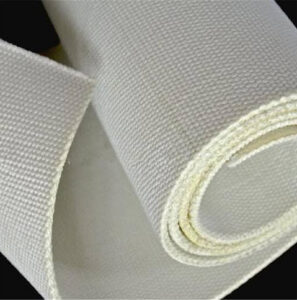
Cement powder can stop a production line without anything “breaking.”…
Read More →
A filter press can be perfectly sized and still disappoint…
Read More →