An Expert Q&A On High Temperature Filter Bags With Industry Leaders
What happens when filtration engineers, boiler operators, and maintenance leaders…
Read More →

High-temperature filter bags rarely fail because of one dramatic event. More often, small decisions shorten their life: choosing media from temperature alone, ignoring moisture, using damaged cages, or cleaning too aggressively. The most useful high temperature filter bags tips are preventive. Match the bag to the gas stream, protect it during installation, monitor pressure and temperature trends, and investigate every early warning sign. The ten mistakes below explain what goes wrong, how operators can correct it before emissions, energy use, or shutdowns increase.
A bag rated for heat can still fail when acids, alkalis, oxygen, solvents, or moisture attack its fibres. Two systems running at 200°C may need different media because their gases differ.
Avoid the mistake by documenting temperature, excursions, chemical composition, humidity, dust type, and cleaning method. Compare aramid, PPS, P84, fiberglass, and PTFE against the whole process, not one number. ClipOn notes that some filter-bag constructions can withstand temperatures up to 260°C, but suitability depends on the application.
A short surge rating is not permission to operate at that temperature continuously. Repeated overheating can weaken fibres, coatings, seams, and membranes before visible burning.
Set alarms below the media’s continuous limit and investigate recurring spikes. Record their duration and cause. High temperature filter bags best practices should distinguish normal, continuous, and short-term peak conditions.
Hot gas does not eliminate moisture risk. During startup, shutdown, air leakage, or process changes, gas may cool enough for condensation. Moist dust can become sticky, blind the media, raise differential pressure, and create corrosive deposits.
Track inlet temperature alongside moisture and acid dew point. Keep housings insulated, repair air leaks, and avoid sending dust-laden gas through cold bags before the system reaches a safe condition.
Base fibre is only part of the specification. A finish or membrane can influence dust release, water repellency, chemical resistance, abrasion behaviour, and emissions performance.
For example, an ePTFE membrane may support surface filtration and easier cake release, while hydrophobic or oleophobic treatments may help in suitable moist or oily conditions. Ask why each treatment is recommended and confirm that its temperature limit matches the fabric.
A new bag placed over a rusty, bent, or roughly welded cage begins with a hidden enemy. Sharp edges and distorted wires rub the fabric during every cleaning cycle.
Inspect cages for corrosion, straightness, broken welds, spacing, and smoothness. Replace doubtful cages rather than polishing obvious damage. Bag diameter and cage fit must match; excessive looseness or tension accelerates wear.
Dragging bags across floors, forcing snap bands, twisting seams, or using sharp tools can create damage before startup. Fiberglass media is particularly sensitive to rough flexing and careless handling.
Use clean gloves, protect bags from moisture and contamination, follow the approved installation sequence, and inspect every tube-sheet seal. After installation, confirm that bags hang correctly and do not contact neighbouring components.
When differential pressure rises, increasing pulse pressure can look like an easy fix. It may remove cake temporarily while stressing fabric, seams, and cages. Cleaning too frequently also prevents a stable filtration layer from forming.
Check pulse valves, compressed-air quality, timing, hopper discharge, dust characteristics, and airflow first. Adjust cleaning from trend data, not frustration. The goal is controlled cake removal, not making every bag look new.
One isolated pressure reading says little. A gradual rise may indicate blinding, weak cleaning, excessive loading, or condensation. A sudden drop can point to a torn bag, failed seal, or bypass.
Record differential pressure with production rate, temperature, and cleaning cycles. Patterns help teams separate process changes from filter problems and act before stack emissions reveal failure.
Changing a damaged bag restores operation but does not solve abrasion, overheating, chemical attack, poor sealing, or cage contact. The next bag may fail in the same position.
Label failed bags, photograph damage, record their location, and examine the pattern. Inlet-side holes suggest a different problem from vertical cage-wire marks or brittle fabric across a compartment. Treat every failure as evidence.
The cheapest bag can become expensive through frequent shutdowns, labour, disposal, higher fan demand, and lost production. A premium medium can also be wasteful when the process does not require it.
Compare expected service life, pressure-drop stability, maintenance effort, cage requirements, finishes, technical support, and replacement risk. Ask suppliers to explain assumptions instead of offering an unsupported lifespan promise.
Effective filtration comes from disciplined decisions before, during, and after installation. Build a process data sheet, select compatible media, protect bags and cages, monitor trends, and investigate failures. For application-specific support, explore ClipOn’s dust collector filter bags and cages and discuss the temperature, chemistry, dust, and cleaning conditions your system actually faces.
What happens when filtration engineers, boiler operators, and maintenance leaders…
Read More →What does “good” really look like when a filter bag…
Read More →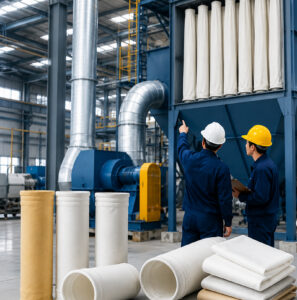
Buying a heat-resistant filter bag is not the same as…
Read More →