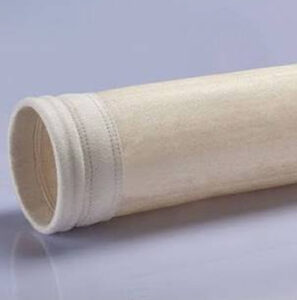
What Is Nomex Filter Bag? A Beginner’s Complete Guide
A dust collector can look ordinary from the outside while…
Read More →

At ClipOn, we know that the heart of an Indian power plant is its boiler. But if the boiler is the heart, the baghouse is the filter that keeps the whole system breathing. In India, coal-fired boilers face a tough environment. We use high-ash coal. We deal with high humidity. We also face strict heat.
Choosing the right filter bag is a big decision. Two names always come up: Fiberglass and PPS (Polyphenylene Sulfide). At ClipOn, we get asked all the time: “Which one is better for my plant?”
The truth is, both have strengths. But in the “war” against harsh boiler conditions, one usually fits your specific needs better than the other. Let’s dive into the details.
Before we compare materials, we must look at what they face. Indian coal is unique. It often contains 35% to 45% ash. When this coal burns, it creates a lot of dust. This dust is abrasive. It acts like sandpaper.
Then there is the chemistry. Flue gas contains sulfur dioxide (SO_2) and nitrogen oxides (NO_x). When these mix with moisture, they turn into acids. These acids eat away at weak filters. Finally, there is the heat. Boiler exhaust is hot, often staying between 140°C and 190°C.
To survive here, a filter bag needs to be a “superhero.”
PPS is often called the “workhorse” of the coal-fired power industry. At ClipOn, we recommend PPS to many clients for its chemical resistance.
PPS is naturally highly resistant to acids and alkalis. In a coal plant where sulfur is present, PPS does not break down easily. It can withstand continuous temperatures of about 160°C.
One big plus for PPS is its flexibility. In a pulse-jet baghouse, the bags expand and contract quickly when hit with a blast of air to knock off dust. PPS is a synthetic fiber that can handle this “bending” millions of times without snapping.
PPS has one “Kryptonite.” It does not like high oxygen levels (O_2) or nitrogen dioxide (NO_2). If your boiler runs with too much excess air, the PPS fibers can become brittle and break.
Fiberglass is the “old guard.” It has been around for a long time for a good reason: it can handle the heat.
While PPS starts to struggle at 170°C, Fiberglass is just getting started. It can handle continuous heat up to 260°C. If your boiler has temperature spikes, Fiberglass is your safety net. It won’t melt.
Fiberglass does not stretch. This means the bags stay the same size throughout their lives. At ClipOn, we treat our Fiberglass bags with special finishes such as PTFE (Teflon) to make them smooth. This helps the dust slide off easily.
Think of a glass rod. It is strong, but if you bend it too far, it snaps. Fiberglass fibers are the same. In a baghouse with very high-pressure cleaning pulses, the tiny glass fibers can rub against each other and break. This is called “flex-fatigue.”
To make it easy, here is how ClipOn views the two materials side-by-side:
| Feature | PPS Filter Bags | Fiberglass Filter Bags |
| Max Temp | 160°C – 190°C | 260°C+ |
| Acid Resistance | Excellent | Fair to Good |
| Flexibility | High (Great for pulse-jet) | Low (Needs careful handling) |
| Cost | Mid-Range | Usually Lower |
| Oxygen Resistance | Poor | Excellent |
At ClipOn, we believe there is no “perfect” bag, only the “right” bag for your specific boiler.
Whether you choose PPS or Fiberglass, the quality of the “make” matters most. A PPS bag is useless if the seams rip. A Fiberglass bag is useless if the coating is thin.
ClipOn filter bags are engineered for the Indian climate. We use:
The “harsh conditions” of an Indian coal-fired boiler don’t have to mean constant shutdowns. By picking the right material, PPS for chemistry and flex, or Fiberglass for extreme heat, you can keep your plant running for years without a bag change.
At ClipOn, we are more than just a supplier. We are your partners in clean air and high efficiency. We help you look at your gas data, your dust load, and your budget to make the smartest choice.
Want to see which bag is right for your plant?
Check out our full range of solutions at www.clipon.io. Let’s get your boiler performing at its peak!
A dust collector can look ordinary from the outside while…
Read More →
A baghouse problem rarely begins when someone notices dust. It…
Read More →
A filter bag rarely fails with a dramatic warning. More…
Read More →