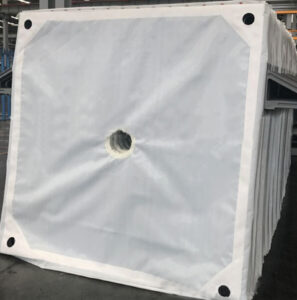
Filter Press Cloth Selection Guide: How to Choose the Right Cloth for Slurry Filtration
A filter press can be perfectly sized and still disappoint…
Read More →

Cement powder can stop a production line without anything “breaking.”
A chute feeds unevenly. Material hesitates. Operators increase air pressure, yet flow becomes less predictable. Soon, a routine transfer between a silo, mill, or packing line becomes a bottleneck.
The problem is often not a lack of air. It is how that air reaches the powder.
In an air slide system, fluidising fabrics control that critical interface. They allow air to pass upward through the conveying surface in a controlled, uniform way, reducing friction between cement particles until the powder behaves more like a fluid. When the fabric matches the material and operating conditions, gravity can do much of the conveying work.
An air slide is divided into two zones. Cement travels above the fabric while low-pressure air enters the chamber below it. The fabric prevents the powder from falling into the air chamber but allows air to permeate through its structure.
As air moves evenly upward, it separates and aerates the fine particles. Internal resistance falls, the cement becomes mobile, and the inclined chute guides it toward discharge.
The principle is simple. In practice, fluidisation depends on consistent air distribution across the working surface.
If one section receives too little air, cement can slow or settle. If airflow becomes irregular, dead zones and unstable conveying can develop. Increasing blower pressure may mask the symptom temporarily without correcting the cause.
The goal is not maximum permeability. It is suitable, uniform permeability.
A fabric that passes air too easily may not create the pressure conditions required by the system. A fabric offering excessive resistance can make the blower work harder and increase energy demand. The correct balance helps maintain stable aeration without wasting pressure.
This is where fluidising fabrics influence more than powder movement. Stable air distribution supports predictable throughput, reduces poor-flow interruptions, and lowers dependence on mechanical conveying components.
Because the conveying surface itself has no moving parts, an appropriately designed air slide can also simplify maintenance compared with many mechanical transport methods.
When an air slide slows down, the fabric should be inspected as part of the system rather than blamed immediately.
Moisture is one concern. Damp cement can encourage caking and restrict fluidisation. Foreign particles can obstruct the conveying path. Air leakage reduces useful pressure. Damage or uneven permeability may create areas where powder no longer aerates consistently.
Temperature can also change the selection requirement. A fabric that works reliably in one transfer point may be unsuitable where hotter material is handled elsewhere in the plant.
The diagnostic question should therefore be: has the powder changed, has the air changed, or has the surface between them changed?
ClipOn provides air slide fabric in thicknesses from 4 mm to 10 mm, with customizable widths for equipment layouts. Available material options include filament polyester, spun polyester, aramid, basalt, and Kevlar, with heat-resistant solutions covering 180°C to 300°C depending on the selected material and application.
Filament polyester can suit discharging, inclined transport, and homogenising powders or small granular materials. Spun polyester suits dry bulk powders where durability and cost efficiency matter.
Where temperatures rise, aramid-based options can provide greater heat resistance. Basalt is intended for more extreme thermal environments.
The point is not to choose the strongest material on paper. It is to choose one whose permeability, thickness, wear resistance, temperature capability, and dimensions suit that air slide.
Before specifying fluidising fabrics, give the supplier a picture of the operating condition, not only the required width.
Those answers make a recommendation more useful than ordering a replacement solely from an old part description.
Good powder flow comes from the relationship between cement properties, fabric permeability, blower performance, chute geometry, temperature, sealing, and operating conditions.
That is why recurring blockage should trigger investigation rather than repeated pressure increases. Check for moisture, contamination, leakage, fabric damage, uneven air distribution, and changes in production conditions. Inspection and cleaning can help prevent restrictions from becoming shutdowns.
ClipOn designs fluidising fabrics for cement and other dry bulk powder applications with customizable dimensions and material choices for different thermal and operating demands.
In a cement plant, the fabric may be hidden inside the chute, but its job is visible everywhere downstream. When air reaches the powder evenly, material moves with fewer interruptions, conveying becomes more predictable, and the air slide can perform as it was meant to: quietly, continuously, and efficiently.
A filter press can be perfectly sized and still disappoint…
Read More →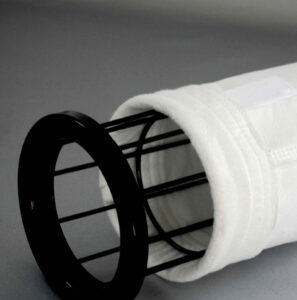
A failed filter bag is rarely just torn fabric. It…
Read More →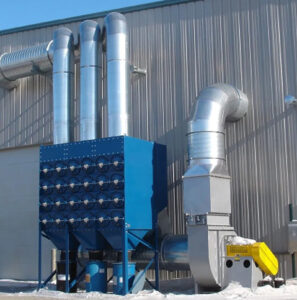
A cartridge filter can look deceptively simple: pleated media, a…
Read More →