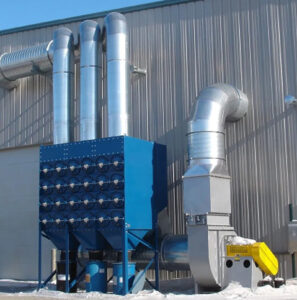
Industrial Cartridge Filters: Types, Applications and Selection Guide
A cartridge filter can look deceptively simple: pleated media, a…
Read More →

A failed filter bag is rarely just torn fabric. It is evidence.
A hole near the cuff can point toward abrasion. A brittle bag may reveal heat or chemical damage. A bag coated with sticky dust can indicate condensation. When maintenance teams learn to read these clues, they stop treating every filter bag failure as the same problem and start finding the condition that caused it.
That matters commercially. Replacing damaged bags without correcting airflow, cage condition, cleaning, moisture, temperature, or media compatibility can create repeating maintenance expense.
Here are ten patterns worth investigating before new bags go in.
If holes, thinning, or polished fabric appear mainly near the lower section, investigate dust impact and bag movement first.
High inlet velocity can drive abrasive particles against bags. Bags may also rub against neighbouring cages or internal components. Check inlet distribution, baffles, cage alignment, spacing, and dust re-entrainment from the hopper.
Long wear marks following cage wires usually suggest repeated bag-to-cage contact.
Bent cages, broken wires, rough welds, incorrect dimensions, or loose bag fit can create friction during operation and cleaning. Installing fabric over a damaged cage simply gives the same problem something new to destroy.
Failure concentrated near the top deserves attention to installation and cleaning hardware.
An incorrectly seated snap band can allow leakage or movement. In pulse-jet collectors, misaligned blowpipes can direct cleaning energy unevenly. Sharp cage edges or incorrect dimensions add local stress.
When several bags fail in the same position, suspect the system before blaming individual bags.
Heat damage usually leaves a different signature from abrasion.
Fabric may become brittle, glazed, distorted, melted, or scorched. Check operating temperature, recent excursions, hot particles, process upsets, hopper conditions, and the temperature capability of the selected media.
A single excursion can shorten service life even when the bag does not fail immediately.
A bag that has lost strength across a broad area may be suffering chemical degradation, oxidation, hydrolysis, or another compatibility problem.
Look at process chemistry, moisture, gas temperature, dew point, and recent raw-material or production changes. Chemical damage may be gradual, making filter bag failure appear sudden even though fibre strength has been declining for months.
Review media selection against the gas stream, not assumptions.
This is the classic pattern of blinding.
Moisture, condensation, oily particles, hygroscopic dust, insufficient cleaning, or fine particles can become embedded in the fabric. Differential pressure rises while airflow suffers because cleaning no longer removes the cake effectively.
Before increasing cleaning pressure, find out why the dust became difficult to release.
Scattered punctures can point toward installation damage, sharp cage points, sparks, abrasive impact, or foreign objects.
Map failed bags inside the collector. If holes cluster near the dirty-air inlet, airflow or erosion may be involved. If punctures align with cage defects, mechanical support is the stronger suspect.
A failure map can turn apparently random damage into a clear pattern.
Simultaneous deterioration is a warning that the cause may be systemic.
Ask what changed: production rate, dust composition, humidity, temperature, airflow, cleaning frequency, compressed-air pressure, upstream equipment, or hopper discharge.
A sudden increase in filter bag failure across multiple positions should trigger process investigation before a complete change-out is ordered.
New bags failing quickly often indicate that the previous root cause was never removed.
Check installation, dimensions, bag-to-cage fit, cage condition, cleaning settings, air-to-cloth conditions, and whether the replacement media truly suits the application.
The useful question is not, “Why did the new bag fail?” It is, “What condition survived the last shutdown?”
Clean-side dust is an operational alarm, not merely a maintenance inconvenience.
Possible causes include torn media, failed seams, damaged seals, incorrect seating, or punctures. Identify the leaking position, inspect neighbouring bags and cages, then determine whether damage is isolated or widespread.
Good failure analysis combines what the bag looks like with where it failed and what the collector was doing beforehand.
Record damage location, differential pressure trends, cleaning frequency, temperature, moisture events, process changes, emissions, airflow behaviour, cage condition, and previous bag life. Compare failed bags instead of discarding them immediately.
ClipOn offers dust collector filter bags in media including polyester, acrylic, aramid, polypropylene, PTFE, P84, glass fibre, and Ryton, alongside specialized finishes and matching support cages for different operating requirements.
The purpose of analysing filter bag failure is not simply to choose another bag. It is to determine whether the real correction belongs in the media, cage, cleaning system, airflow, process conditions, or installation.
When the evidence is read correctly, the next replacement can solve the cause, not repeat the symptom.
A cartridge filter can look deceptively simple: pleated media, a…
Read More →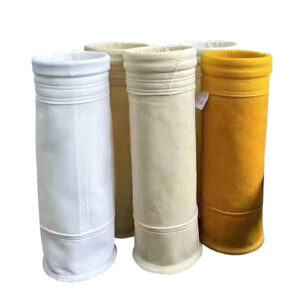
A filter bag rarely fails on the day your maintenance…
Read More →
A filter bag replacement campaign can look successful on installation…
Read More →