How Often Should Dust Collector Filter Bags Be Replaced?
A filter bag rarely fails on the day your maintenance…
Read More →

A cartridge filter can look deceptively simple: pleated media, a cylindrical body and a place inside a dust collector. Yet that compact component can decide whether a plant captures fine dust efficiently or spends its time fighting pressure problems, short filter life and unstable airflow.
The challenge is not finding a cartridge that fits. It is finding one that fits the process without adding unnecessary operating risk.
Industrial cartridge filters work best when their media, dimensions and construction are chosen around the dust itself how fine it is, whether it is dry or damp, how heavily it loads the system, and what temperature or chemical exposure it encounters. This guide turns those variables into a practical selection process.
A cartridge folds filtration material into closely arranged pleats, creating a large filtering surface inside a compact element. That makes the format useful where collector space is limited but production volume and filtration demand remain high.
ClipOn uses pleated cartridges with a criss-crossing pattern designed to maximise usable surface area. Cartridges can also be manufactured in custom sizes.
More pleats, however, do not automatically mean better performance. Pleat spacing, dust release, media compatibility, airflow and cleaning behaviour all influence how effectively that area is used.
The clearest way to understand cartridge “types” is by looking at filter media and the conditions each material is intended to handle.
Polyester is a practical starting point for many general industrial dust applications where conditions are reasonably stable and a durable synthetic media is required.
Cellulose can be considered where dust is dry and operating conditions are comparatively moderate. Suitability should still be checked against loading, humidity, cleaning method and required filtration performance.
PPS becomes relevant when moisture or chemical exposure makes standard media less suitable. Process chemistry, actual temperature and cleaning conditions should be reviewed before specification.
Aramid is commonly considered when elevated temperature is a meaningful operating factor. Peak and continuous temperature still matter; “high temperature” should never be treated as a complete specification.
ClipOn industrial cartridge filters are available with polyester, cellulose, PPS and aramid media, allowing selection to start with the operating environment rather than a one-material-fits-all assumption.
Cartridge filtration works across different processes because the compact format can be paired with different media and system designs.
Shot blasting and metalworking can generate substantial fine particulate. Mining and mineral processing may bring heavy, abrasive dust loads. Powder coating requires capture of fine airborne powder, while foundries and gas-turbine applications create their own demanding operating conditions.
Food processing and pharmaceutical operations add another consideration: filtration has to suit both the process and the characteristics of the material being handled.
ClipOn also identifies applications involving high dust loading, difficult agglomerating dust, elevated temperatures and submicron filtration in damp environments.
Do not begin with a catalogue. Begin with the process.
This prevents industrial cartridge filters from being selected on diameter, price or filtration rating alone.
There is no universal winner.
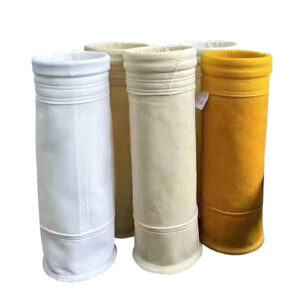
Cartridge filters provide high filtration area in a compact footprint, which can be valuable when space is constrained. Filter bags use fabric formed into bags and are widely used in baghouse systems, including operations with substantial dust loads and different cleaning arrangements.
The better option depends on dust characteristics, airflow, temperature, moisture, cleaning method, filtration requirements and the collector already in place.
A cartridge is easy to purchase. A cartridge that continues performing under real operating conditions takes more thought.
Before contacting a supplier, collect your existing cartridge dimensions, media, process temperature, dust description, moisture conditions, airflow information, cleaning method and current performance issues. If premature clogging, poor dust release or repeated replacement is already occurring, include that history.
ClipOn manufactures custom cartridge sizes and can support complete filter-system design, allowing the filter element to be considered alongside the wider application.
The best industrial cartridge filters are not simply those with the most impressive specification sheet. They are the ones whose media, geometry and system fit make sense for the dust they face every working day.
A filter bag rarely fails on the day your maintenance…
Read More →
A filter bag replacement campaign can look successful on installation…
Read More →
The cheapest filter bag can become the most expensive when…
Read More →