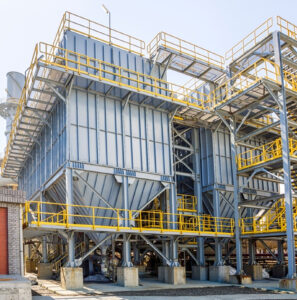
Filter Bag Suppliers Workflow Automation: A Practical Guide
A filter bag suppliers step by step workflow should automate…
Read More →

A normal filter bag can collect dust efficiently until hot process gas weakens, shrinks, glazes, or burns the fabric. High-temperature filter bags are dust-collection bags made from heat-resistant fibres such as aramid, PPS, P84, fiberglass, or PTFE. Installed inside baghouses, they separate particulate matter from hot exhaust while reliably preserving airflow. They are commonly used around boilers, kilns, furnaces, incinerators, dryers, and metal-processing lines. The correct bag is not simply the one with the highest temperature rating; it must also match the gas chemistry, moisture, dust behaviour, cleaning system, and equipment design.
A baghouse may contain fabric tubes supported by metal cages. Dust-laden gas passes through the media, particles remain on its surface, and cleaned gas exits. Pulse-jet, reverse-air, or shaker cleaning removes the collected dust.
Heat complicates this process. Fibres lose strength outside their recommended range, while seams, coatings, membranes, and cages may also deteriorate. A high-temperature bag therefore serves as a filter and thermal barrier.
“High temperature” has no universal cut-off. The figures that matter are continuous operating temperature and short-duration peak temperature. A bag may survive a spike yet fail quickly if operated at that peak every day.
Aramid, often called Nomex, offers mechanical strength and can handle temperatures around 204°C in suitable dry applications. It is considered for asphalt, cement, metal, and boiler dust, but moisture and aggressive acids require careful evaluation.
PPS, also known as Ryton, combines heat tolerance with resistance to many acidic and alkaline environments. It suits demanding boiler conditions, although oxygen levels and temperature excursions must remain controlled.
P84 polyimide supports fine-particle capture and surface filtration. It can suit hot, dusty processes where emissions control is demanding, subject to the gas chemistry and moisture level.
Fiberglass suits very hot, stable gas streams. ClipOn lists fiberglass bags for temperatures up to 260°C. Because glass fibres can be less tolerant of flexing, finish selection, cage condition, and cleaning settings matter.
PTFE provides broad chemical resistance, low surface friction, and strong heat performance. ClipOn PTFE filter bags can operate continuously up to 260°C and tolerate brief peaks up to 300°C. Their higher initial cost may be justified where corrosive gas or moisture rapidly damages other media.
The first question is not “Which fabric is best?” It is “What actually reaches the baghouse?”
Record normal temperature, start-up and shutdown behaviour, and the highest upset temperature. An average reading can hide damaging spikes.
Next, identify the gas chemistry. Sulphur compounds, acids, alkalis, oxygen, solvents, and moisture can attack a fibre even when temperature appears safe. Condensation is dangerous: gas falling below its dew point can create sticky deposits, corrosion, or bag blinding.
Third, study the dust. Fine, abrasive, oily, hygroscopic, or combustible particles require different finishes and controls. A membrane may improve dust release, but it does not increase the base fabric’s temperature limit.
Fourth, check the cleaning method. Excessive pulse pressure or frequent cleaning fatigues bags and seams. Insufficient cleaning raises differential pressure, restricts airflow, and increases fan demand.
Finally, confirm dimensions and hardware. Diameter, length, cuff, bottom construction, seam thread, cage finish, venturi, and tube-sheet fit influence service life. Excellent media on a rough or mismatched cage can fail early.
Trend differential pressure instead of checking it only during breakdowns. A rising trend may indicate poor cleaning, condensation, excess dust loading, or blocked discharge equipment. A sudden drop may signal a torn bag or leak.
Inspect during start-up and shutdown, when temperatures cross condensation zones. Maintain insulation, sensors, pulse valves, and hoppers. Investigate failures by location: inlet-side damage may suggest abrasion, while marks along cage wires indicate rubbing.
These high temperature filter bags tips turn maintenance records into evidence. Log temperature excursions, cleaning frequency, pressure drop, emissions observations, and failed-bag positions. Patterns reveal causes that a visual inspection may miss.
Leave a realistic thermal safety margin rather than selecting media at its published limit. Verify continuous and peak ratings separately, and ensure the membrane, finish, thread, and hardware have compatible limits.
Use representative gas and dust data before ordering. Review bags after the initial operating period, then base inspections on actual conditions. Replace damaged cages with the bags, and correct the root cause before installing new media.
The most important high temperature filter bags best practices are straightforward: control temperature, prevent condensation, match chemistry, clean according to system need, and document failures. These actions often matter more than buying the most expensive fibre.
High-temperature filter bags protect production, equipment, workers, and emissions performance only when selection reflects the process. Begin with operating data, then choose the fibre, finish, construction, and cage as one system.
For spent-wash-fired boilers and other severe thermal applications, explore ClipOn’s high-temperature boiler filter bag solutions and ask its filtration team to recommend a configuration for your gas, dust, and equipment.
A filter bag suppliers step by step workflow should automate…
Read More →
The most important filter bag suppliers statistics are rarely printed…
Read More →
The most useful filter bag suppliers tips are measurable, not…
Read More →