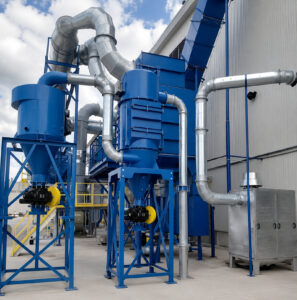
Filter Bag Suppliers News Roundup – Latest Industry Updates
The latest filter bag suppliers updates point to one change…
Read More →

A good filter bag supplier in 2026 does not simply quote a familiar fabric and promise quick delivery. The practical filter bag suppliers benchmarks are measurable: up to 99.9% filtration efficiency where the application supports it, media selected for temperature and chemistry, dimensions matched to the collector, finishes chosen for dust behaviour, cages designed to prevent abrasion, and technical support that continues after dispatch. ClipOn’s own product range shows why these benchmarks matter. It spans multiple fibres, bag constructions, surface treatments, cage materials, and high-temperature options. “Good” therefore means proven fit, not a lower price beside an identical-looking bag.
Imagine two quotations arriving for the same baghouse. Quote A lists “polyester filter bag,” a unit price, and a delivery date. Quote B records the dust type, temperature, gas conditions, differential-pressure concern, cleaning method, bag dimensions, cage construction, finish, and expected filtration requirement.
Both quotations may appear commercially complete. Only one gives the maintenance team enough information to judge risk.
This difference defines the first 2026 benchmark: a supplier should convert operating data into a product specification. ClipOn lists filtration media including acrylic, aramid, glass fibre, polyester, polypropylene, PTFE, P84, and Ryton. That range is valuable only when the selected material is tied to the actual process. Polyester may suit general dust collection, while PTFE is positioned for aggressive chemicals, sticky dust, fine particles, and demanding temperatures.
Among the most useful filter bag suppliers tips is to count how many operating variables appear in the proposal. A stronger quotation should address more than bag length and diameter. It should acknowledge dust concentration, flue-gas conditions, temperature range, differential pressure, cleaning requirements, and any unusual exposure.
“High efficiency” is marketing language until a supplier attaches a measurable figure and suitable conditions. ClipOn states that its engineered microfiber filter bags can deliver 99.9% filtration efficiency. That number creates a useful discussion point, but buyers should still connect it to their dust, collector design, airflow, and operating conditions.
Temperature deserves the same discipline. ClipOn positions PTFE filter bags for continuous operation up to 260°C, with peak tolerance reaching 300°C. A benchmark supplier distinguishes continuous limits from temporary peaks instead of presenting one impressive maximum.
The same principle applies to chemical resistance and durability. “Acid-resistant” should identify the recommended media. “Abrasion-resistant” should explain whether the answer lies in fibre choice, surface treatment, cage design, or a combination of all three.
A long product catalogue does not automatically indicate expertise. Good suppliers narrow the range intelligently.
ClipOn offers finishes including egg-shell, silicone, graphite, e-PTFE, acid-resistant, singed, glazed, oleophobic, fire-retardant, hydrophobic, and PTFE membrane options. The benchmark is not the number of finishes available. It is whether the supplier can explain why one finish fits oily dust, moisture, chemical exposure, difficult dust release, or another identified challenge.
Bag construction also matters. ClipOn lists cylindrical bags, cassette or envelope filters, star bags, multi-channel bags, and RABH filter bags. A supplier meeting current filter bag suppliers benchmarks should connect construction to collector geometry and cleaning behaviour, rather than treating shape as a minor ordering detail.
A premium bag placed over a poorly finished cage can still wear prematurely. That makes cage quality a core supplier benchmark, not an accessory decision.
ClipOn manufactures cages using options such as low-carbon steel, galvanised iron, and stainless steel grades 304 and 316. Its product information also highlights rounded edges, internal welding, polishing, sturdy top and bottom pans, and multiple locking or gripping systems.
These details form a practical inspection model. Buyers should look for smooth contact surfaces, suitable corrosion resistance, dimensional compatibility, secure joints, and a design that supports the bag without creating sharp wear points. Useful filter bag suppliers examples are often found in these apparently small engineering choices, because they influence installation, stability, abrasion, and replacement frequency.
“Custom-made” should mean more than altering length. ClipOn describes customisation around dust concentration, emissions, temperature, differential pressure, sizes, finishes, collar designs, cage materials, and system configurations.
A good supplier should therefore be able to translate an existing sample, drawing, OEM reference, or process problem into a controlled specification. The result should identify the selected media, weight or construction, treatment, dimensions, top and bottom design, stitching, and matching cage arrangement.
This is where supplier quality becomes visible before production. Clear specifications reduce ambiguity, make approvals easier, and allow future orders to be checked against an agreed reference.
The final benchmark is accountability. The supplier should help the buyer select the product, confirm compatibility, explain installation, and investigate unusual wear or performance changes.
In 2026, “good” looks like a supplier that can discuss filtration as a system. That includes the dust collector bag, supporting cage, cleaning method, temperature, chemical conditions, pressure behaviour, and maintenance environment. Price remains important, but it should be compared beside expected durability, fit, process suitability, and operational risk.
The clearest filter bag suppliers benchmarks are not slogans. They are documented choices that another engineer can understand, verify, and reorder.
To compare your current specification against these standards, explore ClipOn’s Dust Collector Filter Bags and Cages. Review the available media, specialised finishes, bag types, cage materials, and custom configurations, then connect with ClipOn’s technical team to discuss the requirements of your dust collection system.
This approach gives procurement, engineering, and maintenance teams a shared language for comparing vendors. It also prevents a low initial quote from hiding mismatched media, avoidable cage damage, or recurring replacement costs later.
The latest filter bag suppliers updates point to one change…
Read More →
Choosing a filter bag supplier requires more than comparing fabric…
Read More →
Building a supplier team starts by assigning ownership across engineering,…
Read More →