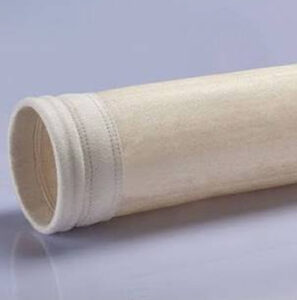
What Is Nomex Filter Bag? A Beginner’s Complete Guide
A dust collector can look ordinary from the outside while…
Read More →

This dust collector filter bags case study follows a fictional mineral-blending plant that turned recurring dust complaints into a controlled 30-day campaign. The team did not begin by buying new bags. It established a baseline, mapped failures, checked cleaning and discharge equipment, corrected damaged cages, confirmed the specification, planned installation and verified performance under comparable production. The numbers are illustrative, not ClipOn customer results. They show how a plant can organise a filter-bag campaign around evidence and measurable acceptance criteria instead of treating replacement as a one-day task.
“Project Clear Shift” began after operators reported weak capture around a powder-transfer point. Maintenance had replaced six bags over three months, yet the issue returned.
The pulse-jet collector served two blending lines. Production had recently increased, but no new baseline existed. The team knew the bags were three years old; it did not know whether age, airflow, moisture, cleaning or mechanical damage drove the problem.
Four objectives guided the campaign:
Success meant completing these checks and showing stable operation within plant-approved conditions not promising a particular bag life.
For three representative days, operators recorded differential pressure, pulse cycles, production tonnes, inlet temperature and visible-dust observations.
| Baseline measure | Illustrative result |
| Differential-pressure index | 100 at comparable full load |
| Pulse cycles per batch | 61 |
| Weak-capture observations | 7 across 3 days |
| Unplanned interventions | 6 in the previous 90 days |
| Failed-bag locations | 5 in one compartment, 1 elsewhere |
The pressure was indexed because no universal operating value should be copied. An index of 100 represented the starting condition, not an industry target.
Location data proved especially useful. Five of six damaged bags came from one compartment, suggesting a local problem rather than uniform ageing.
During approved isolation, the team removed representative bags from failed and unaffected positions. Each sample was tagged with compartment, row and position.
Four damaged bags showed abrasion at almost the same height. Their cages had rough weld areas and distortion. Other bags were unusually stiff near the bottom. The hopper beneath that compartment contained compacted material.
Compressed-air checks also found moisture at a drain point, while two pulse rows operated inconsistently. No single observation proved the complete cause. Together, they changed the question from “Which stronger bag should be purchased?” to “Which conditions must be corrected before installation?”
That reframing is one of the most useful dust collector filter bags tips from the case. A replacement campaign should investigate what the previous bags experienced.
The plant sent suppliers a structured enquiry containing dust details, temperatures, operating hours, cleaning method, drawings, photographs and inspection findings.
Instead of accepting “premium filter bags,” the team requested:
The selected proposal retained process-compatible media but revised the finish and cage specification. This is illustrative, not a recommendation for every mineral plant. Media selection must reflect actual temperature, chemistry, dust and collector design.
The shutdown plan separated dirty removal from clean installation. Old bags were removed carefully, and selected samples were retained. Tube-sheet openings and sealing surfaces were checked before new media entered the area.
Every cage received a visual and dimensional review. Damaged pieces were rejected. Installers worked in pairs: one placed the bag and cage; the other checked its seal, identification and position against the installation map.
The hopper was cleared, inconsistent pulse components were repaired and the compressed-air drain issue was addressed. The campaign therefore corrected supporting conditions rather than treating fabric as the entire system.
A final count reconciled installed bags, spares, rejected cages and unused materials before closure.
The plant restarted through a controlled production sequence and collected the same measures used during baseline work.
| Measure | Before | After |
| Differential-pressure index | 100 | 82 |
| Pulse cycles per batch | 61 | 46 |
| Weak-capture observations | 7 in 3 days | 1 in 7 days |
| Unplanned interventions | 6 in 90 days | 0 in first 7 days |
These figures do not prove long-term savings or service life. The post-campaign period is shorter, so intervention counts cannot be compared fairly. Early data only indicated a more stable pattern under approved conditions.
At the 30-day review, the team checked whether production levels were comparable, alarms remained active and operators continued reporting exceptions.
Four controls stayed in place:
These dust collector filter bags best practices made the campaign repeatable. If conditions changed later, the plant would have a documented reference rather than memory.
This composite case shows that filter-bag improvement is not simply procurement followed by installation. It connects operating evidence, failure analysis, specification, shutdown quality and post-start verification.
ClipOn provides dust collector filter bags in multiple media, finishes and configurations, together with compatible filter cages for varied industrial applications. Discuss Your Dust Collector Filter Bag Requirements with operating data, collector drawings and failure evidence ready for a focused technical review.
A dust collector can look ordinary from the outside while…
Read More →
A baghouse problem rarely begins when someone notices dust. It…
Read More →
A filter bag rarely fails with a dramatic warning. More…
Read More →