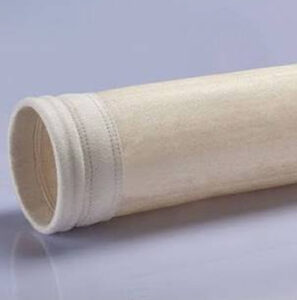
What Is Nomex Filter Bag? A Beginner’s Complete Guide
A dust collector can look ordinary from the outside while…
Read More →

A dust collector filter bags comparison shows that filter bags usually provide stronger control of fine, dry particulate than simple mechanical separators such as cyclones. However, they are not better in every situation. Wet scrubbers may suit hot, moist or sticky streams and can address certain gases alongside particles. Electrostatic precipitators can handle very large gas volumes with high collection efficiency. The best performer is the technology matching particle size, moisture, temperature, gas chemistry, utilities, waste handling and the required control level.
“Traditional method” covers technologies that work differently. Comparing only advertised efficiency creates a false contest.
| Technology | Removal method | Common strength | Main consideration |
| Filter bags | Dust collects on fabric and dust cake | Fine, dry particulate | Media compatibility and cleaning |
| Cyclone | Centrifugal force separates particles | Coarse-dust pre-cleaning | Limited fine-particle capture |
| Wet scrubber | Liquid droplets capture pollutants | Moist or sticky streams | Water and liquid waste |
| Electrostatic precipitator | Charged particles move to plates | Large gas volumes | Capital and technical complexity |
Actual performance depends on equipment design, particle distribution and operating conditions.
A baghouse passes contaminated gas through woven or non-woven media. Particles remain on the surface, while the developing dust cake supports fine-particle capture. Pulse-jet, reverse-air or shaker systems remove accumulated dust.
The U.S. Environmental Protection Agency states that fabric filters are generally capable of collection efficiencies above 99%. This describes broad technology capability, not guaranteed results. Performance depends on media, leaks, temperature, moisture, airflow, cleaning and particle characteristics.
Filter bags can be adapted through media and finishes. ClipOn lists polyester, polypropylene, acrylic, aramid, fiberglass, PPS, P84 and PTFE, together with multiple configurations.
Their weakness is sensitivity to poor matching. Condensation can cause blinding, heat may damage unsuitable media, and rough cages can create abrasion. The baghouse also needs reliable cleaning and dust discharge.
A cyclone makes dusty gas spin. Centrifugal action moves heavier particles towards the wall, and they fall into a hopper.
EPA guidance identifies cyclones primarily as controls for particulate matter larger than 10 micrometres. They can therefore remove coarse material before it reaches another collector.
Cyclones contain no filter media to replace and can tolerate demanding conditions when constructed appropriately. Their main limitation is fine-particle capture. A cyclone may remove large particles while smaller material remains in the gas stream.
The question is often not “cyclone or filter bags?” A cyclone before a baghouse may reduce loading on the bags. The technologies can complement each other.
Wet scrubbers contact contaminated gas with droplets or liquid surfaces. Particles are captured through impaction, interception and diffusion. Some designs also address soluble gases.
An EPA wet-scrubber guide reports that collection varies considerably. It cites approximately 40–60% or lower for simple spray towers and above 99% for venturi scrubbers. Higher efficiency usually brings greater energy and operating demands.
Wet scrubbers can suit sticky dust, high-moisture streams or applications requiring simultaneous gas treatment. They may also cool hot gas.
However, captured material becomes liquid or slurry. The plant must manage water, corrosion, pumps, treatment and disposal. Where recovered material should remain dry or wastewater is difficult to handle, filter bags may be more practical.
An electrostatic precipitator, or ESP, charges particles and attracts them to collection plates. Rapping or washing removes the material.
The EPA states that ESPs can achieve efficiencies greater than 99%. Again, this is a general capability rather than a site guarantee.
ESPs can process large gas volumes with relatively low pressure drop, making them relevant to major power, cement and industrial exhaust duties.
Performance may change with particle electrical properties, gas conditions and flow distribution. ESPs also require high-voltage equipment, considerable capital and specialised maintenance. A baghouse may be easier for smaller plants, while an ESP may suit stable, large-scale flows.
A useful dust collector filter bags comparison starts with the process.
Dry cement transfer: Fine particulate and dry product recovery may favour a baghouse. A cyclone could provide pre-cleaning where coarse loading is high.
Hot, moisture-rich chemical exhaust: A wet scrubber may suit combined gas absorption and particle capture. Corrosion and wastewater still require planning.
Large utility boiler: ESPs and fabric filters may both be viable. Gas volume, ash properties, requirements, layout, capital and operating experience determine the choice.
These dust collector filter bags examples show why no technology wins only because its brochure carries the highest percentage.
Buyers should ask:
One of the most useful dust collector filter bags tips is comparing lifecycle requirements, not purchase price alone. Include fans, pumps, compressed air, water, parts, labour, downtime and waste treatment.
Dust collector filter bags best practices also require confirming media compatibility, dimensions, cage condition and cleaning method before ordering. A high-performing material still needs the correct system around it.
Filter bags often perform best for fine, dry dust when compatible media and maintenance are available. Cyclones are valuable for coarse separation. Wet scrubbers gain an advantage with moist or sticky streams and combined gas control. ESPs compete strongly at very large scale.
ClipOn supplies filter bags in multiple media, finishes and configurations, together with compatible cages for varied industrial applications. Find the Right ClipOn Dust Collector Filter Bag by sharing process conditions, dust characteristics and collector requirements with the technical team.
A dust collector can look ordinary from the outside while…
Read More →
A baghouse problem rarely begins when someone notices dust. It…
Read More →
A filter bag rarely fails with a dramatic warning. More…
Read More →