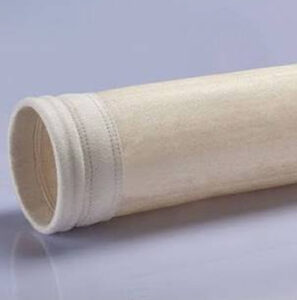
What Is Nomex Filter Bag? A Beginner’s Complete Guide
A dust collector can look ordinary from the outside while…
Read More →

If you are asking “what is dust collector filter bags,” the simple answer is this: they are fabric filtration elements installed inside an industrial dust collector, usually a baghouse, to separate dust from moving air or gas. Dust-laden air reaches the bags, particles collect on the fabric, and filtered air moves onward. The collected layer is removed periodically by compressed-air pulses, reversed airflow or mechanical shaking. Filter bags are used in cement, metals, minerals, food processing, pharmaceuticals, power generation and woodworking, but the correct design depends on the process.
Picture a particle released while cement is transferred, metal is ground or flour is mixed. Left uncontrolled, it may settle on equipment or travel through the workplace.
A dust collection system creates airflow that pulls contaminated air towards a hood. Ductwork carries it to the collector, where many filter bags provide a large fabric surface.
The particle reaches the media and is captured on or within its structure. Cleaner air moves to the clean side. Trapped particles form a layer commonly called dust cake.
That journey explains the bag’s role. It is not a storage sack. It is a working filtration surface that must balance particle capture, airflow and cleanability.
A dusty bag may look ineffective. During normal operation, however, a controlled dust layer can support filtration by becoming part of the capture surface.
Problems begin when that layer becomes too thick, sticky or difficult to remove. Airflow resistance increases and is commonly monitored as differential pressure across the filtration section.
High differential pressure does not automatically mean defective bags. Heavy loading, moisture, ineffective cleaning, blocked discharge equipment, airflow changes or a faulty instrument may create a similar signal. A sudden decrease may indicate leakage or damaged media.
Study trends under comparable production conditions rather than judging one reading.
Baghouses generally use three cleaning approaches.
Pulse-jet cleaning sends short compressed-air bursts through the bags to release dust, often while the collector operates.
Reverse-air cleaning changes airflow direction so the fabric flexes and releases the accumulated layer.
Shaker cleaning uses mechanical movement, commonly while the relevant section is offline.
Released dust falls towards the hopper and discharge system. An overfilled hopper can send material back towards the bags. Performance therefore depends on the complete collector, not the fabric alone.
Cleaning frequency and pressure should follow approved operating guidance. More aggressive cleaning is not automatically better because it can consume additional energy and increase mechanical stress.
Filter bags use woven or non-woven media chosen for particular conditions. Common options include polyester, polypropylene, acrylic, aramid, fiberglass, PPS, P84 and PTFE.
These are not interchangeable labels. Each responds differently to temperature, moisture, acids, alkalis, oxidation and abrasion. Treatments and finishes may alter dust release, water or oil resistance, static behaviour and surface filtration.
Bag forms also vary. ClipOn lists cylindrical, cassette or envelope, star and multi-channel configurations. The right shape depends on the collector, available space, filtration area and airflow.
A metal cage commonly supports a bag in pulse-jet systems. Its dimensions, straightness and surface condition matter because broken wires or sharp edges can abrade the media.
Consider two similarly sized collectors.
Plant One handles dry mineral dust at elevated temperature. Its priorities may include temperature capability, abrasion behaviour and dust release.
Plant Two handles moisture-sensitive food powder at a lower temperature. It may require attention to hygiene, condensation, finish selection and relevant product-contact requirements.
Ordering bags only by diameter and length ignores these differences. A supplier needs the dust type, normal and peak temperatures, moisture, gas chemistry, particle behaviour, airflow, cleaning method, dimensions and applicable standards.
This is why “what is dust collector filter bags” has a broader answer than “fabric tubes.” A filter bag is a process-matched component inside an engineered air-handling system.
Correctly selected and maintained bags can support particulate capture, cleaner operations and equipment protection. They may also help a facility meet applicable process requirements when the complete system is properly designed and managed.
They cannot correct every dust-control problem. A bag will not repair poorly positioned hoods, leaking ducts, an incorrectly selected fan or failed hopper discharge. It is also not a complete safeguard for combustible dust. Facilities handling potentially combustible material need a competent hazard assessment covering ignition sources, grounding, housekeeping, explosion protection and relevant regulations.
Avoid assuming one efficiency percentage, service-life figure or air-to-cloth ratio applies everywhere. These values depend on the test method, dust, design and operating conditions.
Operators need not wait for a torn bag. Useful warning signs include:
One of the most practical dust collector filter bags tips is recording when each symptom occurs and what the plant was producing. Photographs, temperature, pressure trends and failure locations make troubleshooting more useful.
Dust collector filter bags best practices also include inspecting cages during replacement, protecting new bags from sharp objects, checking seals, storing spares correctly and confirming performance after restart.
Filter bags work quietly, but their performance connects production, maintenance, energy use and workplace conditions. Understanding their journey—from dusty air to captured material and controlled cleaning—helps buyers ask better questions and technicians examine the full system.
Choosing the right filter bag begins with understanding the process behind it. Share your dust properties, operating temperature, cleaning method and collector specifications with ClipOn’s technical team to identify a suitable combination of filter media, finish, configuration and cage.
A dust collector can look ordinary from the outside while…
Read More →
A baghouse problem rarely begins when someone notices dust. It…
Read More →
A filter bag rarely fails with a dramatic warning. More…
Read More →