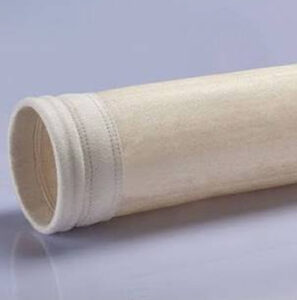
What Is Nomex Filter Bag? A Beginner’s Complete Guide
A dust collector can look ordinary from the outside while…
Read More →

The biggest air filter manufacturer updates of 2026 are not about one breakthrough product. They reveal a wider shift in how filtration is specified, tested, monitored, and purchased. Market demand is rising, particulate standards are tightening, high-efficiency testing remains under scrutiny, and buyers are paying closer attention to pressure drop, lifecycle cost, customisation, and performance data. For manufacturers, good filtration now means more than supplying a filter that fits. It means proving how the product behaves inside a real system. This roundup separates the headlines from the practical decisions plant, maintenance, and procurement teams should make next.
This analysis follows six industry signals. Each changes what buyers should request from an air filter manufacturer and what manufacturers must explain.
The global air-filter market was valued at about USD 17.08 billion in 2025 and is projected to reach USD 18.29 billion in 2026, according to one current industry estimate. Another forecast places the industrial air-filtration market at USD 39.3 billion by the end of 2026. Forecast methods differ, but both indicate expanding demand.
Growth brings more suppliers, formats, media claims, and price points. Buyers may see similar-looking cartridges, panels, or bags described as efficient, durable, compliant, or advanced.
The practical air filter manufacturer tip is to compare the evidence behind the language. Ask which application data informed the recommendation, which product was tested, which limits apply, and what support follows installation. Market growth rewards buyers who can separate manufacturing capacity from application competence.
In February 2026, the Commission for Air Quality Management directed industries across Delhi-NCR to meet a particulate-matter emission limit of 50 mg/Nm³. The requirement applies to large and medium units from August 1, 2026, and other industries from October 1, 2026. The direction includes highly polluting categories, food-processing and textile operations with boilers, and metal industries with furnaces.
For filter manufacturers, the update raises the value of application data, system audits, sealing, pressure control, and performance. A bag filter cannot be declared compliant in isolation; the plant’s air-pollution-control system, conditions, maintenance, and stack results determine the outcome.
ClipOn’s application-led model fits this shift by analysing dust, airflow, temperature, pressure, and air-to-cloth ratio before design. Buyers should ask what changes, evidence, and monitoring are needed to meet the limit.
ISO 29463 remains a key reference series for high-efficiency filters and filter media. Parts covering test aerosol equipment and filter-element leakage were reviewed and confirmed in 2024, so they remain current in 2026. High-efficiency performance cannot be established through a general percentage alone.
A filter may require classification, media testing, leakage evaluation, or a scan method depending on the target. Buyers should be cautious when HEPA appears without a class, standard, test record, or product-specific context.
Strong air filter manufacturer best practices match the evidence package to the exact filter. A certificate from one construction should not imply that every size, media, frame, or seal performs identically. In 2026, traceability is becoming as important as the claim.
Energy efficiency is moving filtration discussions beyond maintenance teams. A filter’s resistance can influence airflow, cleaning demand, blower load, and operating stability. Yet the lowest initial pressure drop does not automatically win. Media area, dust loading, surface behaviour, capture target, and cleaning method must be considered together.
ClipOn reviews airflow patterns, pressure limits, particle distribution, temperature, and air-to-cloth ratio before recommending a solution. It links this analysis to improved airflow, lower differential pressure, reduced machinery stress, and lower blower load.
Buyers should request three pressure references: the clean-filter baseline, expected operating band, and investigation threshold. Connect those values to airflow and production conditions instead of comparing catalogue figures without system context.
ClipOn’s PM2.5 article notes that some advanced systems use IoT-based sensors to monitor air quality, filter performance, and pressure drop in real time. This is not confirmation that every ClipOn product includes monitoring, but it shows the market’s direction.
The important development is not the sensor. It is the decision made from the data. Pressure alerts without airflow, loading, temperature, and filter-age context can create noise. Useful monitoring connects trends to maintenance actions.
An air filter manufacturer example is a cartridge system where gradual pressure increase triggers inspection before airflow becomes unstable. Another is a baghouse where pressure changes are compared with cleaning cycles and production load. Manufacturers that interpret data, rather than merely collect it, offer greater value.
Supply disruption, imported equipment, discontinued parts, and modified plants have increased demand for reverse engineering, non-standard dimensions, limited runs, and application-specific construction.
ClipOn positions itself beyond off-the-shelf supply through plant analysis, system audits, customised retrofits, maintenance planning, and engineering support. Its cartridge range offers pleated designs, PPS, polyester, cellulose, and aramid media, custom sizes, and complete-system capability.
Availability alone no longer defines resilience. A stocked filter is useful only when it suits the equipment and duty. Manufacturers that preserve drawings, revisions, materials, and inspection records can make custom supply repeatable rather than improvised.
Another implication is sustainability. Longer service life, lower resistance, reusable components, and fewer emergency replacements can reduce waste and operating demand, but only when claims are supported by application data. Buyers should ask whether a proposed environmental benefit comes from material choice, energy performance, maintenance reduction, or product longevity. Clear mechanisms are more valuable than broad green language, especially when two filters have different pressure, cleaning, and replacement profiles.
The purchasing question is shifting from “Can you supply this size?” to “Can you demonstrate why this design suits our system?”
A 2026 enquiry should include dust behaviour, normal and peak temperature, airflow, pressure trends, cleaning method, available space, equipment details, current filter life, and the required result. The manufacturer should return material reasoning, construction details, applicable evidence, manufacturing controls, and a performance-review plan.
These air filter manufacturer updates also show why initial price is incomplete. Replacement frequency, energy, maintenance, downtime, inventory, disposal, and technical support shape the real cost.
ClipOn combines customised filter bags, cages, cartridges, and panel filters with application analysis, manufacturing controls, audits, retrofits, maintenance planning, and continued engineering support.
Its manufacturing process moves through selected procurement, precise production, application-specific coating and finishing, and final quality control. This supports a central 2026 expectation: the solution discussed during engineering must be reproduced during manufacturing.
For plants facing clogging, pressure problems, poor fit, or changing conditions, repeating the old filter is not always safest. The operating profile may show that the media, surface, construction, support, or wider system needs to change.
The latest air filter manufacturer updates point toward a more accountable industry. Growth is increasing choice. Fine-particle expectations are improving technical conversations. High-efficiency standards keep testing and leakage evidence in focus. Energy concerns are turning pressure drop into a commercial issue. Monitoring is creating richer maintenance data, while custom engineering is strengthening resilience.
These developments do not remove the need for filtration judgement. They make that judgement more visible.
The manufacturers that stand out in 2026 will explain what they know, identify uncertainty, manufacture consistently, and stay involved after delivery.
Do not let the next filter decision stop at dimensions, price, and availability. Share your dust profile, airflow, temperature, pressure history, equipment details, cleaning method, and current performance with ClipOn.
Use these industry questions to challenge the recommendation, evidence, and support behind your order. ClipOn’s engineered air-filtration team can assess the application and help develop a solution around the way your system operates.
A dust collector can look ordinary from the outside while…
Read More →
A baghouse problem rarely begins when someone notices dust. It…
Read More →
A filter bag rarely fails with a dramatic warning. More…
Read More →