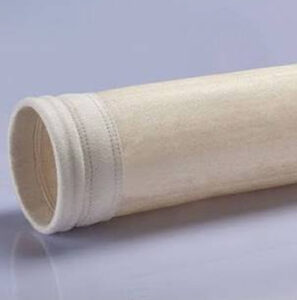
What Is Nomex Filter Bag? A Beginner’s Complete Guide
A dust collector can look ordinary from the outside while…
Read More →

The most expensive filtration mistake is often made before a single filter is produced. A plant shares dimensions, a supplier sends a quotation, and everyone assumes the technical work is finished. It is not. The best air filter manufacturer expert advice is to begin with the operating problem: dust behaviour, airflow, pressure, temperature, available space, cleaning method, and the result the plant needs. In this editorial Q&A, questions commonly raised by plant heads, maintenance teams, process engineers, and procurement leaders are answered through ClipOn’s published engineering approach. The goal is practical: help buyers ask sharper questions before the next order.
Editorial note: This is a structured industry Q&A based on ClipOn’s published product and engineering guidance. It is not presented as a verbatim interview with named individuals.
Engineering perspective: Because the filter is only one part of a working air system. A product can match the old dimensions and still create rising resistance, weak airflow, poor dust release, leakage, or early wear. ClipOn’s approach begins by reviewing dust behaviour, airflow patterns, operating loads, pressure limits, particle-size distribution, temperature, and air-to-cloth ratio. Those factors influence whether the filter should be repeated, modified, or redesigned.
The difficult part is not finding a company that can manufacture a filter. It is finding one that can explain why a particular media, geometry, surface, seal, and support arrangement suit the application.
Engineering perspective: Start with an application snapshot rather than a product request. Include the current filter dimensions, equipment details, dust type, normal and peak temperature, airflow data where available, pressure behaviour, cleaning method, service life, visible failure pattern, and any recent process changes.
Photographs of worn bags, cartridges, cages, seals, or housings can reveal useful patterns. So can maintenance records showing when differential pressure began rising or where damage repeatedly appeared.
One of the most useful air filter manufacturer tips is to separate facts from estimates. Mark confirmed measurements clearly. Identify values that are approximate. List information that is still unknown. A capable manufacturer can then recommend what should be checked before finalising the specification instead of quietly treating every number as certain.
Engineering perspective: It should divide the investigation into filter causes and system causes.
Filter causes may include unsuitable media, an incorrect finish, weak seams, poor pleat construction, wrong dimensions, inadequate reinforcement, or incompatible sealing. System causes may include excessive loading, unsuitable airflow, cleaning problems, damaged support cages, leakage, moisture, process changes, or temperature excursions.
This distinction matters because a stronger filter cannot repair a bent cage, and a new cartridge cannot permanently compensate for a housing leak. ClipOn positions system audits, retrofitting, maintenance planning, and engineering support alongside product supply, reflecting a broader lifecycle view.
A good investigation ends with evidence linking the failure pattern to the recommended change.
Engineering perspective: There is no single universal number, but several plant-specific measures tell a useful story:
Differential pressure over time
Airflow or suction stability
Cleaning frequency
Visible dust or leakage
Wear location and rate
Replacement interval
Maintenance interventions
Production interruptions linked to filtration
The trend matters more than one isolated reading. A pressure value without operating load, airflow, dust conditions, or filter age can be misleading.
For cartridge systems, available space and filtration area also matter. ClipOn’s cartridges use pleated, criss-cross patterns to increase surface area and are positioned for applications where space is constrained but high-grade filtration is required.
Engineering perspective: Compare the reasoning before comparing the price.
Ask each manufacturer to submit the same five items:
Its understanding of the operating problem
The proposed media and why it was selected
Construction, dimensions, sealing, and support details
The quality checks applied before dispatch
The support available after installation
Then compare lifecycle implications: replacement frequency, labour, cleaning demand, fan or blower burden, downtime exposure, inventory, disposal, and technical support.
The cheapest filter may be suitable. The most expensive filter may be unnecessary. A fair comparison tests how clearly each proposal connects design decisions to plant outcomes.
Engineering perspective: It should sound specific, not impressive.
ClipOn lists acrylic, aramid, glassfiber, polyester, polypropylene, PTFE, P84, and Ryton across its filter-bag range. Its cartridge media include PPS, polyester, cellulose, and aramid. The value of this range lies in application fit, not the number of choices.
A good recommendation should explain:
Which operating risk the material addresses
How it responds to normal and peak temperature
Whether moisture, abrasion, or chemistry affects it
How it is expected to behave during cleaning
Which alternative was considered
What conditions would require the choice to be reviewed
“Premium media” is a marketing phrase. “Selected for this dust, temperature, moisture, and cleaning method” is engineering.
Engineering perspective: Ask for product-specific evidence.
Terms such as efficient, HEPA, compliant, food-grade, high-temperature, or low-pressure-drop need context. Buyers should request the exact product, applicable test method, classification, operating conditions, and current supporting document.
ClipOn’s panel-filter lists multiple classes and references EN, ISO, and ASHRAE standards, while its cartridge references industry ISO, EN, and DIN norms. The buyer still needs to confirm which standard and classification apply to the exact quoted product.
The best air filter manufacturer best practices make claims traceable. Logos and broad company statements should never replace the evidence required for a specific filter.
Engineering perspective: It is central because filtration must work with airflow, not against it.
A filter may capture particles effectively but create excessive resistance for the available fan or blower. Rising differential pressure can affect suction, cleaning demand, energy use, and process stability. ClipOn’s engineered-filtration links design decisions to optimal airflow, lower differential pressure, reduced machinery stress, and lower blower load.
Instead of asking for a universal “good” pressure number, define three application-specific references:
Clean-filter starting point
Expected operating band
Investigation threshold
The manufacturer should explain how media area, permeability, surface behaviour, dust loading, and cleaning influence those values.
Engineering perspective: Cartridge filters deserve consideration when space is limited, high filtration area is needed in a compact design, or the dust and process suit pleated media. ClipOn states that its cartridges use pleated criss-cross patterns, can be made in custom sizes, and can be supplied as part of a complete designed filter system. Available media include PPS, polyester, cellulose, and aramid.
Bag filters may be more suitable for heavy dust loads and tougher industrial environments, depending on airflow, dust characteristics, cleaning, temperature, and collector design. ClipOn distinguishes cartridges for finer dust and limited space from bag filters for heavier loads.
The answer should come from the application, not a blanket product preference.
Engineering perspective: Buyers often focus on overall dimensions and media while overlooking pleat arrangement, usable media area, end caps, gaskets, support, mounting, sealing, and available cleaning access.
A cartridge that fits physically can still leak at the gasket, deform under operating conditions, clean poorly, or place too much media into a geometry where pleats become ineffective.
Ask the manufacturer for a controlled construction record covering dimensions, tolerances, media, pleat design, support structure, sealing, and mounting. ClipOn’s cartridge capability includes custom sizing and complete-system design, which is valuable when a standard replacement does not match the housing or duty.
Engineering perspective: Use a trial when the application is unusual, the previous specification is uncertain, or a design change carries risk. Agree on quantity, installation area, conditions, inspection schedule, and success measures.
A trial should answer questions about fit, sealing, pressure behaviour, cleaning, wear, and maintenance access. It should not become an experiment without ownership.
Record what remains unchanged during the trial. Otherwise, a process adjustment may be credited to the filter, or a filter may be blamed for system changes.
Engineering perspective: They should expect visible control points.
ClipOn describes four connected stages: procurement, precise production, coating and finishing, and final quality control.
For buyers, that translates into practical questions:
How are approved raw materials identified?
Which dimensions and construction details are critical?
How is the specified finish confirmed?
What is inspected before shipment?
How are revisions preserved for repeat orders?
A successful prototype proves little if later batches drift from the approved design. Repeatability should be treated as a performance measure, not paperwork.
Engineering perspective: Pause when a manufacturer:
Recommends a product without asking about the process
Uses one material for every condition
Cannot explain the proposed finish or geometry
Copies a failed filter without discussing why it failed
Makes universal service-life promises
Uses compliance language without product-specific evidence
Ignores cages, seals, mounting, or cleaning
Focuses only on unit price
Has no technical route after delivery
None of these signs automatically proves poor manufacturing. They show that the evaluation is incomplete.
Good air filter manufacturer expert advice reduces uncertainty before production. If important questions remain unanswered, the next step is clarification, measurement, inspection, or a controlled trial.
Engineering perspective: ClipOn combines product choice with application analysis and lifecycle support.
Its filtration portfolio includes dust collector bags and cages, cartridge filters, and panel filters. Its published engineering model considers dust, airflow, pressure, temperature, loading, particle distribution, and air-to-cloth ratio. It also offers custom sizing, reverse engineering, audits, retrofits, maintenance planning, and troubleshooting support.
The practical focus is not simply custom manufacturing. It is the connection between plant conditions, product design, controlled production, and post-supply review.
That approach becomes particularly valuable when standard replacements fit the housing but fail to solve recurring operational problems.
Engineering perspective: Do not purchase a filter in isolation from the system that uses it.
Begin with the operating gap. Ask what evidence explains the current problem. Make the manufacturer justify the media, finish, geometry, sealing, and support. Agree on the manufacturing record and quality checks. Define what will be monitored after installation. Preserve the approved specification for future orders.
Most importantly, leave room for the answer to be more than “replace the filter.” The system may need a cage change, sealing correction, cleaning adjustment, retrofit, or revised operating practice.
The best manufacturer does not make the buying process more complicated. It makes the technical risk easier to see.
The strongest air filter manufacturer expert advice is built around questions, evidence, and follow-through.
Plant leaders need filters that support production. Maintenance teams need predictable inspection and replacement. Process engineers need stable airflow and pressure. Procurement needs defensible value. Environmental teams need claims that can be traced to the correct product and requirement.
A manufacturer earns trust by connecting those needs. It should diagnose before recommending, explain material and construction choices, manufacture consistently, document important claims, and remain available when real operating data arrives.
That is what turns a filter from a purchased component into an engineered part of plant performance.
A cartridge should not be chosen from diameter, length, and price alone. Dust behaviour, airflow, temperature, moisture, available space, pleat construction, sealing, pressure behaviour, and maintenance access all affect the decision.
Share those details with ClipOn and ask the questions raised in this expert Q&A. The team can review your application and develop a custom cartridge filter solution using application-specific media, custom sizing, pleated construction, and complete-system engineering where required.
A dust collector can look ordinary from the outside while…
Read More →
A baghouse problem rarely begins when someone notices dust. It…
Read More →
A filter bag rarely fails with a dramatic warning. More…
Read More →