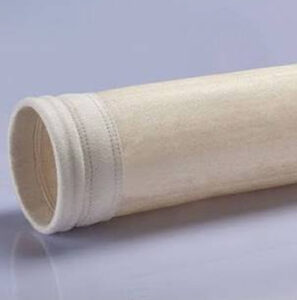
What Is Nomex Filter Bag? A Beginner’s Complete Guide
A dust collector can look ordinary from the outside while…
Read More →

A disappointing filter usually begins with a decision made before production starts. Bad dust data, copied specifications, vague claims, or ignored pressure problems can turn a purchase into repeated shutdowns. The most useful air filter manufacturer tips are therefore not about finding the cheapest catalogue. They are about preventing ten predictable mistakes: treating dimensions as the complete specification, overlooking dust behaviour, choosing media by habit, ignoring finishes and support parts, accepting unsupported claims, comparing only unit prices, skipping manufacturing checks, neglecting maintenance, expecting the filter to fix the whole system, and choosing a company that disappears after dispatch.
Most air filter failures do not begin with a torn bag, a clogged cartridge, or a sudden rise in differential pressure. They begin earlier, during selection, design, manufacturing, or purchasing.
A manufacturer may copy the old dimensions without asking why the previous filter failed. A buyer may choose familiar media without checking temperature, dust behaviour, moisture, or chemical exposure. A quotation may look attractive while hiding higher maintenance, shorter service life, and repeated downtime.
These are not rare technical oversights. They are common, preventable mistakes that can affect airflow, energy use, emissions control, equipment health, and production continuity.
This guide shares ten practical air filter manufacturer tips, explains where manufacturers and buyers often go wrong, and shows how proven air filter manufacturer best practices can turn a routine replacement order into a smarter, longer-lasting filtration decision.
A used filter is evidence, not a complete specification. It can reveal dimensions, fixing arrangements, seams, frames, or cage compatibility. It cannot explain whether the original selection suited today’s production conditions.
Plants change. Output rises, materials vary, ducting is modified, and cleaning settings drift. Copying an old filter may reproduce the same weakness that caused clogging, tearing, leakage, or short service life.
Send the sample, but add an operating note. Include normal and peak temperature, dust type, visible damage, differential-pressure behaviour, cleaning method, current life, and recent process changes.
ClipOn approaches filter design by reviewing dust behaviour, airflow patterns, operating loads, pressure limits, particle-size distribution, temperature, and air-to-cloth ratio. That wider picture shows whether the old construction should be repeated, adjusted, or replaced.
That phrase is too vague for engineering. Fine mineral dust, sticky food powder, abrasive metal particles, moist chemical dust, and hot process dust behave differently on a filter surface.
Dust can penetrate media, resist cleaning, absorb moisture, abrade fibres, or react with the material. The right selection depends on what the dust does, not merely how much of it exists.
Describe the dust using practical observations:
Is it dry, sticky, oily, abrasive, or hygroscopic?
Does it arrive continuously or in sudden peaks?
Does it release during cleaning?
Does it collect near seams or contact points?
Are moisture, acids, or other chemicals present?
Samples, photographs, safety data, and process information can help the manufacturer ask better questions.
“We always use polyester” is not a design rule. Familiar media can be economical and effective when conditions suit it, but habit becomes expensive when temperature, chemistry, moisture, abrasion, or cleaning demand changes.
ClipOn lists filter-bag media including acrylic, aramid, glassfiber, polyester, polypropylene, PTFE, P84, and Ryton. These options exist because industrial environments vary.
Ask the manufacturer to explain three things:
Why the proposed fibre suits normal conditions.
What happens during peak conditions.
Why the closest alternative was not selected.
The answer should connect material choice to the process. A brand name or impressive temperature figure is not enough without application context.
Two bags made from the same fibre can behave differently because of their surface treatments. A finish may influence dust release, resistance to oil or water, chemical durability, fire behaviour, or fine-particle control.
ClipOn lists egg-shell, silicone/graphite/e-PTFE combinations, acid-resistant, singed, glazed, oleophobic, fire-retardant, hydrophobic, and PTFE-membrane finishes for its filter-bag range.
Do not ask for the “best finish.” Ask what problem the finish is expected to solve.
For example, difficult dust release may call for a different surface approach than moisture exposure. An acid-related problem is not automatically solved by an oil-repellent treatment. Every finish should have a clear purpose, benefit, and limitation.
A strong filter bag can still fail against a damaged, misaligned, corroded, or poorly finished cage. Sharp edges may abrade fabric. Weak support can allow collapse. Incorrect geometry can create rubbing, poor fit, or difficult installation.
ClipOn supplies cages in materials such as low-carbon steel, galvanized iron, and stainless steel 304/316. It highlights rounded edges, internal welding, sturdy pans, and polished surfaces intended to reduce bag damage.
Inspect bags and cages as a working pair. Check:
Cage diameter and length
Corrosion or coating failure
Bent wires and broken welds
Sharp contact points
Top and bottom fittings
Loading configuration
Alignment inside the collector
Replacing bags without correcting cage damage can reset the failure clock rather than solve the cause.
Words such as durable, efficient, compliant, advanced, and high-performance sound reassuring but do not define a result. Even a numerical efficiency claim is incomplete without the exact product, test method, conditions, and intended application.
The same caution applies to promises about service life, pressure drop, energy savings, temperature resistance, or perfect fit.
Convert each sales claim into a question:
Efficient at what particle range and test condition?
Durable against which temperature and chemical exposure?
Lower pressure drop at what airflow?
Compliant with which requirement?
Expected life compared with which operating baseline?
Fit confirmed by which drawing, sample, or measurement process?
One of the strongest air filter manufacturer best practices is making claims traceable to a specification rather than leaving them as advertising language.
A filter costing less today may demand more cleaning, fail earlier, increase maintenance work, or contribute to unplanned downtime. A more expensive option is not automatically better. Compare cost across the working cycle.
Build a simple ownership table covering:
Purchase price
Expected replacement interval
Labour and installation
Cleaning demand
Inventory and disposal
Blower or fan burden
Planned and emergency downtime
Technical support
Risk to emissions, air quality, equipment, or product cleanliness
Ask each manufacturer to explain which design decisions influence those costs. This changes the conversation from “Which bag is cheapest?” to “Which proposal gives the clearest operating value?”
Buyers often study media brochures while ignoring how the finished filter is produced. Correct material can still become an inconsistent product when dimensions, seams, frames, coatings, gaskets, or final inspection are poorly controlled.
ClipOn describes four manufacturing stages: selected procurement, precise production, application-specific coating and finishing, and final quality control.
Request visibility into the controls relevant to your order. Ask how raw materials are identified, which dimensions are critical, how finishes are verified, what is inspected before dispatch, and how repeat orders are matched to the approved specification.
You need confidence that the prototype, first batch, and future replacements follow the agreed construction.
Filters rarely move from perfect condition to total failure without signals. Rising differential pressure, unstable airflow, visible dust, unusual cleaning frequency, abrasion, corrosion, and repeated localised damage can provide warning.
Ignoring those signals turns maintenance into emergency purchasing.
Create a review routine with defined observations and responsibility. Record pressure behaviour, cleaning changes, visible wear, cage condition, leakage, filter life, and process modifications.
ClipOn positions its support beyond initial supply through filter-system audits, retrofitting, proactive maintenance planning, performance reviews, troubleshooting, and engineering assistance.
Maintenance data also improves the next purchase. It gives the manufacturer evidence instead of forcing both sides to diagnose a failure from memory.
A filter operates inside a larger arrangement. Housing leaks, poor airflow distribution, unsuitable cleaning pressure, damaged cages, incorrect installation, process moisture, or an overloaded air-to-cloth ratio can undermine a well-made product.
Changing media repeatedly will not repair a leaking housing. Stronger stitching will not correct severe cage abrasion. A premium membrane cannot compensate indefinitely for uncontrolled process conditions.
Ask the manufacturer to separate filter causes from system causes. A useful review may include the bag or cartridge, support structure, sealing, airflow, cleaning cycle, pressure trends, and process changes.
This is where ClipOn’s system-level positioning matters. Its approach includes audits and customised retrofits, not merely replacement products. The aim is to identify what must change around the filter as well as within it.
Before approving an order, check whether you can answer yes to these questions:
Has the manufacturer understood the actual failure?
Is the media recommendation explained?
Does every finish address a defined condition?
Have support cages, seals, or frames been considered?
Are important claims connected to evidence?
Has lifecycle cost been discussed?
Are manufacturing checks clear?
Is post-supply technical support available?
Several “no” answers do not always mean rejection. They mean the buying conversation is unfinished.
The most valuable air filter manufacturer tips are preventive. Do not copy a worn product without reviewing the process. Do not reduce complex dust to one vague description. Do not choose media from habit, overlook finishes, ignore cages, accept broad claims, compare only purchase prices, skip production controls, delay maintenance, or expect one filter to correct every system fault.
ClipOn’s advantage is its application-led approach. The company connects dust behaviour, airflow, pressure, temperature, particle distribution, air-to-cloth ratio, media, finishes, construction, audits, retrofits, maintenance planning, and technical support.
That does not make every filtration problem simple. It makes the route to a defensible decision clearer. That discipline protects performance after installation.
Your cartridge filter should be selected for the conditions inside the system, not simply matched to an old part number.
Speak with ClipOn about your airflow, dust characteristics, operating temperature, pressure behaviour, space limitations, housing design, and maintenance concerns. The engineering team can use these details to develop a custom cartridge filter solution with the right media, dimensions, pleated construction, sealing, and support for your application.
A dust collector can look ordinary from the outside while…
Read More →
A baghouse problem rarely begins when someone notices dust. It…
Read More →
A filter bag rarely fails with a dramatic warning. More…
Read More →