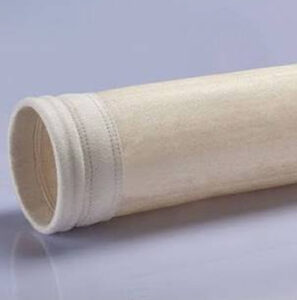
What Is Nomex Filter Bag? A Beginner’s Complete Guide
A dust collector can look ordinary from the outside while…
Read More →

If you are asking “what is air filter manufacturer,” the direct answer is simple: an air filter manufacturer is a company that designs, produces, checks, and supplies filters that remove dust and other airborne particles from industrial or commercial air systems. A capable manufacturer does more than copy dimensions. It studies dust behaviour, particle size, airflow, temperature, pressure, equipment limits, and operating goals before selecting the media and construction. The result should be a filter that fits the system, maintains airflow, controls emissions, handles the working environment, and lasts for a practical service period.
A filter may look like a replaceable component, yet it can influence how smoothly an entire plant operates. When it is poorly matched, the system may experience clogging, high differential pressure, weak airflow, increased blower load, frequent cleaning, short filter life, or downtime. An experienced manufacturer therefore studies the problem the product must solve. Its real value lies in matching the filter to the operating conditions instead of treating every replacement as an identical purchasing task.
The term “air filter” covers several products because systems handle different dust loads, particle sizes, temperatures, space limitations, and air quality requirements.
ClipOn’s filtration portfolio includes dust collector filter bags and cages, cartridge filters, and panel filters.
Dust collector filter bags are used in industrial collection systems where dusty air passes through filter media. Dust remains on the surface while cleaner air moves through. Supporting cages help bags retain their shape during operation. ClipOn offers media including polyester, polypropylene, acrylic, aramid, fiberglass, PTFE, P84, and PPS for different plant conditions.
Cartridge filters use pleated media. The pleats create more filtration surface within a compact space, making cartridges useful where a large media area is needed without an oversized housing. ClipOn lists PPS, polyester, cellulose, and aramid among its cartridge media options.
Panel filters are used in ventilation, air handling, manufacturing facilities, hospitals, pharmaceutical lines, and cleanroom-related environments. ClipOn supplies panel filters in different filtration classes, shapes, sizes, and support constructions according to the application.
A basic supplier may receive a size, locate a matching product, and dispatch it. That can work when the existing specification is correct. It becomes risky when the current filter is already failing.
A manufacturer controls or manages how the filter is made. It should be able to discuss media, dimensions, seams, coatings, frames, cages, pleat construction, gaskets, and finishing.
An engineering-led manufacturer goes further. It asks why the previous filter clogged, leaked, tore, collapsed, or created excessive resistance. It studies the filtration system, not just the sample.
ClipOn follows this problem-first approach. The company considers dust behaviour, airflow patterns, operational loads, pressure limits, particle size distribution, operating temperature, and air-to-cloth ratio before developing a tailored solution.
Dust may be fine, coarse, abrasive, sticky, oily, moist, chemically aggressive, or exposed to high temperatures. Its particle distribution and loading can also change as production changes.
A filter that performs with dry dust may struggle when moisture makes particles agglomerate. A material that handles moderate heat may weaken during repeated temperature peaks. Abrasive particles may damage media, seams, or cages faster than expected.
A filter must capture particles without preventing the system from moving the required air volume. Resistance across the filter is commonly discussed as differential pressure.
When resistance rises too far, airflow can fall and machinery may work harder. ClipOn connects better filter design with optimal airflow, reduced blower load, lower energy consumption, and less stress on plant equipment.
The manufacturer should understand airflow patterns, operating load, cleaning cycles, and the pressure the system can handle. Choosing denser media without considering these factors may improve one measure while damaging overall performance.
Media selection is a critical decision. ClipOn’s materials cover industrial conditions including ordinary dust duties, high heat, chemical exposure, moisture, abrasion, and demanding emissions control.
The fibre is only part of the answer. The manufacturer may recommend finishes such as singeing, glazing, acid resistance, water repellence, oil repellence, fire resistance, or a PTFE membrane, depending on the filter and application.
A useful recommendation explains why the material and finish suit the process. “Premium media” is not an engineering explanation.
Two filters made from similar media can perform differently because of construction.
For a filter bag, the manufacturer may consider shape, length, diameter, stitching, seam placement, cuff design, bottom construction, reinforcement, and cage compatibility. ClipOn produces cylindrical, cassette or envelope, star, multichannel, and reverse-air baghouse filter bags.
For cartridge filters, pleat geometry, media area, support, sealing, and dimensions influence fit and performance. For panel filters, the frame, media depth, support structure, sealing, and filtration class matter.
ClipOn describes a four-stage manufacturing approach: strong procurement, precise production, application-specific coating and finishing, and final quality control.
Procurement helps secure the correct raw material. Production must follow the agreed dimensions and construction. Finishes must match the process. Final inspection checks the product before shipment.
This stage turns an engineering recommendation into a repeatable physical filter.
Installation is not the end of the filtration story. Housing condition, leakage, cage alignment, cleaning settings, airflow distribution, maintenance, and process changes can affect results.
ClipOn supports the filtration lifecycle through system audits, retrofitting, proactive maintenance planning, filter performance reviews, troubleshooting, and engineering advice. It also offers reverse-engineered solutions for legacy, imported, and custom-built systems.
Continued involvement matters when recurring failures cannot be solved by ordering the same replacement again.
Consider a plant experiencing repeated filter bag clogging. Ordering another bag with identical dimensions may restore operation briefly, but it may not remove the cause.
An engineering review could reveal that the dust load has increased, particles are finer, the media releases dust poorly, the cleaning cycle is unsuitable, or the air-to-cloth ratio is placing too much demand on the available filter area. Moisture or a temperature change could also be involved.
The response might include different media, a surface finish, revised construction, improved cage compatibility, a retrofit, or maintenance changes. Sometimes the filter must change. Sometimes the system around it must change too.
This is why capable manufacturers ask operational questions before giving a final recommendation.
These air filter manufacturer tips can reduce trial and error.
First, describe the problem, not only the dimensions. Explain whether the current filter is clogging, tearing, leaking, collapsing, showing high differential pressure, requiring frequent cleaning, or failing early.
Second, provide operating information. Temperature, dust type, particle size, airflow, pressure limits, cleaning method, current filter life, equipment details, and production conditions help define the application.
Third, ask why a media or construction is recommended. A strong answer connects the choice to heat, abrasion, moisture, chemistry, loading, airflow, cleaning, or the filtration objective.
Fourth, discuss total operating cost. Purchase price matters, but so do energy use, maintenance, replacement frequency, downtime, machinery stress, and service life.
Fifth, ask about customisation and reverse engineering. This is useful for old machinery, imported equipment, unusual housings, or filters that are no longer readily available.
Finally, confirm what happens after delivery. A manufacturer that can review performance, investigate failure, suggest maintenance, or modify the design can offer more value than one that disappears after dispatch.
Reliable air filter manufacturer best practices begin before production.
The manufacturer should collect enough information to define the need clearly. It should recommend media and construction based on operating conditions, and document the agreed specification.
During production, suitable raw materials, controlled dimensions, proper stitching or assembly, application-specific finishes, and final checks help maintain consistency.
After supply, the manufacturer should consider operational feedback. Pressure behaviour, filter life, visible dust, airflow, cleaning frequency, wear patterns, and equipment performance can show whether the product is working as intended.
Another important practice is honesty about limits. No single material is ideal for every temperature, chemical, dust, and moisture condition. Responsible engineering means selecting for the real environment rather than making universal promises.
ClipOn positions filtration as problem-solving. Instead of beginning with a standard catalogue product, the company studies dust, airflow, pressure, operating load, particle distribution, temperature, and air-to-cloth ratio.
Its range includes dust collector filter bags and cages, cartridge filters, and panel filters for applications across cement, metals, mining, chemicals, power generation, food processing, pharmaceuticals, manufacturing, and other sectors.
Its support includes audits to identify inefficiencies, customised retrofits, preventive maintenance planning, reverse engineering, and technical assistance after delivery.
This is ClipOn’s central difference: product manufacturing is connected to plant-level engineering. The objective is not merely to make a filter that fits. It is to help the system maintain airflow, manage dust, control emissions, reduce equipment stress, extend service life, and operate reliably.
So, what is an air filter manufacturer? It is a company that converts an air quality or dust collection requirement into a physical filtration product. The strongest manufacturers do this through application study, material selection, construction design, controlled production, quality checks, and continuing support.
The most important lesson is that a filter should not be selected by size alone. Dust behaviour, temperature, airflow, pressure, particle distribution, cleaning, equipment design, and operating goals influence the correct choice.
ClipOn brings these factors together through engineered filters, customisation, reverse engineering, system audits, retrofits, maintenance planning, and lifecycle support.
When generic replacements keep producing the same problems, explore ClipOn’s engineered solutions from air filter manufacturers in India. Share the plant conditions, current performance, and result you need. A better filtration decision begins with understanding the system, not merely copying the old filter.
A dust collector can look ordinary from the outside while…
Read More →
A baghouse problem rarely begins when someone notices dust. It…
Read More →
A filter bag rarely fails with a dramatic warning. More…
Read More →