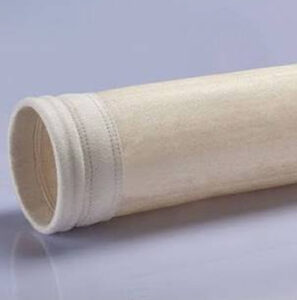
What Is Nomex Filter Bag? A Beginner’s Complete Guide
A dust collector can look ordinary from the outside while…
Read More →

In India, the monsoon is a season of life, but for industrial plant managers, it is a season of struggle. At ClipOn, we see the same pattern every year: as the humidity climbs, the number of distress calls we get about “blinding” filters and high-pressure drops skyrockets.
When your boiler or kiln exhaust meets the moisture of the Indian monsoon, the dust inside your baghouse changes. It stops being a dry, easy-to-handle powder and starts becoming a sticky, heavy “mud.” If you aren’t prepared, this mud can shut your plant down in a matter of days.
In this blog, we will look at why humidity is the enemy of your filter bags and how you can protect your plant during this monsoon.
In a dry environment, the dust cake on your filter bag is loose. When the pulse-jet system fires, the shockwave easily knocks the dust off.
However, when humidity is high, moisture molecules sit on the surface of the dust particles. When these particles hit your filter bags, they don’t bounce off. They “glue” themselves to the fabric. This is called blinding.
Once a filter bag is clogged, air cannot pass through it. Your ID fan has to work much harder, your energy bill spikes, and if the pressure gets too high, the bag can literally rip apart.
As we have discussed before at ClipOn, acid is a silent killer. In the monsoon, the air entering your system is already cool and damp. If your baghouse isn’t properly insulated, the metal walls get cold. When the hot, sulfur-rich flue gas touches these cold walls, it condenses into acid.
During the monsoon, this acid formation is much more common. This acid doesn’t just eat your cages; it turns the fly ash into a corrosive slurry that dissolves the fibers of your filter bags.
At ClipOn, we recommend a “Monsoon Preparedness Plan” for every plant. Here is how you can keep your filters dry and clean:
Your pulse-jet system uses compressed air to clean the bags. If your air dryer isn’t working perfectly, you are literally spraying water inside your bags every time they pulse.
If your baghouse housing is uninsulated, the monsoon will make it impossible to keep the internal temperature above the acid dew point.
This is our best defence against monsoon moisture. A ClipOn filter bag with a PTFE membrane acts like a raincoat. Because the membrane is hydrophobic (it repels water), the moisture cannot soak into the bag fabric. The dust stays dry enough to be pulsed off, even in high humidity.
How you run your plant during the rains is just as important as the bags you buy.
When the weather is perfect, a “cheap” bag might perform just fine. But when the monsoon hits, the difference between a high-quality ClipOn bag and a cheap alternative becomes very clear.
The monsoon doesn’t have to mean production downtime. With the right insulation, a strict focus on air-drying, and high-performance ClipOn filter bags, you can keep your system breathing clearly all through the rains.
At ClipOn, we are here to support your team. If you find your pressure drops spiking, call us. We can help you analyze your current bags and move to a moisture-resistant solution that will make your next monsoon your easiest one yet.
Ready to monsoon-proof your plant? Visit us at www.clipon.io to learn more about our PTFE-membrane bags and our range of acid-resistant filtration solutions. Let’s keep your plant running strong, rain or shine!
A dust collector can look ordinary from the outside while…
Read More →
A baghouse problem rarely begins when someone notices dust. It…
Read More →
A filter bag rarely fails with a dramatic warning. More…
Read More →