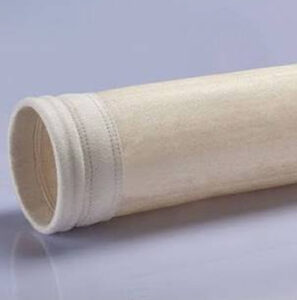
What Is Nomex Filter Bag? A Beginner’s Complete Guide
A dust collector can look ordinary from the outside while…
Read More →

In the world of industrial filtration, there is one number that keeps engineers up at night: the Air-to-Cloth (A/C) Ratio. At ClipOn, we believe that understanding this ratio is the secret to building a dust collection system that lasts.
If you get this ratio wrong, your filter bags will fail too soon, your fan will burn out, and your plant will suffer from constant downtime. In this blog, we will break down what the A/C ratio is and how it affects your day-to-day operations.
The Air-to-Cloth ratio is simple physics. It tells you how much air (in cubic meters per hour) is being pushed through every square meter of your filter fabric.
Think of it like a screen door. If you have a small screen and try to push a lot of air through it, the air moves very fast. This fast air forces dust deep into the screen. If you have a larger screen, the air moves more slowly, and the dust sits gently on the surface.
In our world, the “screen” is your filter bag. A low A/C ratio means your filter has plenty of room to breathe. A high A/C ratio means your filter is “choking” on dust.
Every manufacturing process produces a different type of dust.
If your A/C ratio is too high, two things happen:
To get the right A/C ratio, you must look at the whole system anatomy.
At ClipOn, we use advanced needle felts. We can choose the weight and the pore size of the felt to match your A/C ratio. If your ratio must be high due to space constraints, we use a thicker, more durable fabric to protect against high-speed airflow.
The cage holds the bag open. The Venturi (the nozzle at the top of the cage) is vital. It acts like a “booster” for the cleaning pulse. When the air-to-cloth ratio is high, we use specialised Venturis to ensure the cleaning pulse hits the bottom of the bag with full force.
The hopper is where the dust goes to die. If the A/C ratio is too high, the air speed inside the baghouse is too fast. Instead of the dust falling into the hopper, it keeps swirling around. This is called “re-entrainment.” A well-designed system includes internal baffles to slow the air down before it reaches the bags.
At ClipOn, we always push for a lower, more conservative A/C ratio. Why? Because it gives your plant a “safety margin.”
If you design your plant to run at the absolute maximum A/C ratio, you have zero room for error. If the dust load spikes or if the humidity rises, your system will fail. When we help design your filtration setup, we aim for the “sweet spot” where your bags stay clean, your ID fan draws less power, and your emissions remain well below the legal limits.
If you suspect your system is struggling, check these points:
The Air-to-Cloth ratio is the blueprint for your dust collector’s health. It isn’t just a math problem; it’s the difference between a system that runs for years and one that fails every few months.
At ClipOn, we help you understand your system’s anatomy. We look at your dust type, your gas speed, and your fabric choice to ensure your A/C ratio is perfect for your specific manufacturing unit.
Want to check if your A/C ratio is optimal? Visit us at www.clipon.io. Let’s work together to make your filtration system more efficient, cleaner, and more reliable than ever before.
A dust collector can look ordinary from the outside while…
Read More →
A baghouse problem rarely begins when someone notices dust. It…
Read More →
A filter bag rarely fails with a dramatic warning. More…
Read More →