
Fluidising Fabrics: How Air Slide Fabrics Improve Powder Flow in Cement Plants
Cement powder can stop a production line without anything “breaking.”…
Read More →

Kazakhstan, the largest economy in Central Asia, is driven by its vast energy and resource sectors, including oil, gas, mining, and metallurgy. While this industrial base has fueled rapid economic growth, it has also led to significant environmental challenges, particularly high levels of air pollution from stationary sources.
In response, Kazakhstan has implemented an ambitious Green Economy Transition strategy, aiming for carbon neutrality by 2060 and introducing a new Environmental Code (2021) based on the Best Available Techniques (BAT) principle. This landmark legislative shift, which includes integrated environmental permits and geometrically increasing emission fees, makes modern air pollution control systems, particularly industrial bag filters, absolutely critical for the nation’s heavy industries operating across regions like Karaganda, Ust-Kamenogorsk, and Pavlodar.
At ClipOn, we are committed to partnering with Kazakhstan’s largest industrial polluters, the top 50 enterprises responsible for 80% of the nation’s pollution, to achieve compliance and operational efficiency under the new BAT framework.
The new Environmental Code shifts the burden of pollution control onto the industrial operator through the “polluter pays and corrects” principle. Facilities that fail to implement Best Available Techniques (BAT) will face emission fees that double, quadruple, and eventually increase eightfold every three years.
A key immediate target for facilities, especially in the energy and mining sectors, is reducing solid emissions (dust and ash). The transition to BAT for thermal and energy production facilities prioritizes achieving technological emission indicators for dust (particulate matter) within the first eight years.
The main polluters, mining, metallurgy (ferrous metals, ferroalloys), and coal-fired power generation, all operate in extreme conditions (high heat, abrasive dust, and acidic components). Filtration systems must not only be efficient but also resilient.
Our bag filter systems are custom-engineered to overcome the thermal and chemical challenges inherent in Kazakhstan’s key industries, ensuring reliable performance under the new compliance regime.
Kazakhstan’s energy mix is heavily reliant on coal, which generates massive volumes of ash and sulfur dioxide (SO_2).
This sector deals with extremely abrasive metallic and mineral dusts and high-value materials (e.g., copper, zinc, ferroalloys).
Kazakhstan’s vast geography involves extreme temperature variations. Our systems are specified with appropriate housing materials, insulation, and cleaning mechanisms to perform optimally in both the harsh winter climate and warm summer months, ensuring year-round efficiency.
Implementing a ClipOn bag filter system is more than just a purchase—it’s a strategic investment that aligns your operations with the Green Economy Transition mandate.
ClipOn is ready to supply the advanced filtration technology and expertise necessary for Kazakhstan’s heavy industry to navigate this critical legislative shift. By modernizing air pollution control with our reliable industrial bag filters, you secure operational stability, meet the goals of the Green Economy, and commit to a cleaner future for Kazakhstan.
Contact ClipOn today to discuss a BAT compliance assessment for your facility.
Cement powder can stop a production line without anything “breaking.”…
Read More →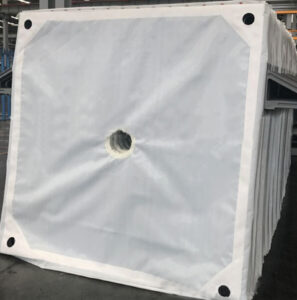
A filter press can be perfectly sized and still disappoint…
Read More →
A failed filter bag is rarely just torn fabric. It…
Read More →