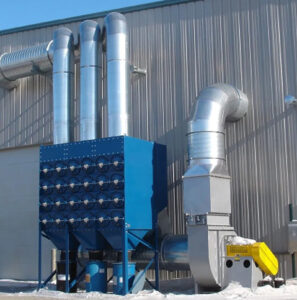
Industrial Cartridge Filters: Types, Applications and Selection Guide
A cartridge filter can look deceptively simple: pleated media, a…
Read More →

Walk through any cement plant in India, and one thing becomes clear — every second counts. Conveying raw materials efficiently can make or break the rhythm of production. Over the years, many plants have tried to optimize this stage using mechanical systems and complex conveyors. But in practice, those setups often bring more headaches than they solve. This is where air slide fabric quietly transforms the game. It’s not flashy. It’s not loud. But it’s one of the unsung workhorses that keep cement plants running smoothly day after day.
For the cement sector, where uptime, dust control, and cost efficiency are critical, air slide technology is more than just a convenience. It’s a necessity. That’s why air slide fabric for cement plant use has steadily grown across India’s industrial landscape.
At first glance, air slide fabric doesn’t look like much. It resembles a thick, woven textile strip. But what makes it remarkable is how it behaves under controlled airflow. Compressed air flows through the fabric’s tiny pores, gently lifting and fluidizing powdered material sitting on top. Instead of grinding or pushing, the material glides along with ease — almost as if it were floating.
This simple mechanism solves multiple problems at once. It reduces wear on equipment, eliminates blockages, and provides an even, predictable flow. In the Indian cement ecosystem — where raw materials like clinker, fly ash, and finished cement must be handled continuously — this technology fits in perfectly.
The Indian cement industry is a complex machine. It involves crushing, grinding, blending, burning, and finally, storage and dispatch. Every step needs precision. Material movement between these steps has traditionally been done using bucket elevators, screw conveyors, and other mechanical means. While they work, they also consume more power, require frequent maintenance, and can be prone to breakdowns.
With air slide fabric for cement industry operations, much of that friction is removed. Air slides can transport bulk materials at low angles with minimal moving parts. This means:
In short, air slides make the flow of powder behave like water down a gentle slope — controlled, efficient, and almost effortless.
India’s cement plants operate under unique pressures. High throughput, varied raw material conditions, and increasingly strict environmental standards make reliability more valuable than ever. Here’s why air slide fabric fits perfectly in this environment:
1. Gentle Material Flow Reduces Loss
Unlike heavy-duty conveyors that pound and scrape, air slides support material with a cushion of air. That means less particle degradation and reduced dust loss. In the cement trade, every gram matters — not just for efficiency, but for compliance.
2. Minimal Residue and Easy Cleaning
When cement flows over an air slide fabric bed, it leaves very little residue behind. This leads to fewer blockages and less manual cleaning. Plants that use air slides report far fewer unplanned stoppages compared to those that rely solely on mechanical systems.
3. Energy Efficiency in Long Runs
Energy costs are a constant concern. Air slides need only blowers and compressed air — not large motors, gearboxes, or complex mechanisms. Over the course of months, this results in significant savings. For cement producers, that’s real money back in the business.
4. Improved Dust Control
Dust is more than a housekeeping issue. With tighter environmental regulations, controlling particulate emissions is a legal and operational necessity. Air slide systems are enclosed, which dramatically cuts down dust escape. This not only protects workers but also helps plants meet compliance standards.
5. Flexibility and Scalability
Different sections of a cement plant handle materials with different moisture levels and particle sizes. Air slide fabric can be manufactured with varying permeability and thickness to match those requirements. This flexibility means a single technology can adapt across multiple conveying lines.
Picking the right air slide fabric isn’t as easy as grabbing any roll. You’ve got to think about a few key things:
Permeability – It needs to let just the right amount of air through so the powder moves evenly. Too much air? Waste. Too little? Clogs.
Thickness – If it’s too thin, it wears out fast. Too thick, and air can’t flow well.
Strength – It should be tough enough to handle nonstop use without tearing.
Heat resistance – Cement gets hot. The fabric needs to take the heat without shrinking, burning, or falling apart.
Picture this: a mid-sized cement plant on the outskirts of a busy industrial city. Production is decent, but every few days, there’s a familiar problem — the clinker transfer line clogs. Workers have to shut everything down, clean the system, and restart. Each incident costs time and money.
Now imagine replacing that unreliable transfer system with a properly installed air slide bed using the right air slide fabric for cement plant conditions. Material starts to flow smoothly, blockages disappear, and maintenance teams suddenly have fewer emergency calls. Production goes up without buying new heavy equipment. That’s the power of getting this one decision right.
In India’s rapidly evolving cement sector, choosing the right partner for such a critical component can make a lasting difference. We at ClipOn provide the best air slide fabric solutions built around real plant needs, not just theoretical specs. Our fabrics are engineered to withstand abrasive cement dust, high temperatures, and long hours of continuous operation.
We at ClipOn also offer expert guidance on selecting permeability, fabric thickness, and installation methods, ensuring every plant gets a solution that works — not a temporary fix.
The cement industry in India is growing fast, but growth brings complexity. Efficiency is no longer optional. Dust control is not a “nice to have.” Energy savings aren’t just an added bonus — they’re essential for survival in a competitive market.
That’s why air slide fabric for cement industry applications aren’t just another equipment choice. They’re part of a smarter, leaner way of running a plant. By switching to air slide technology, plants gain smoother flow, lower costs, cleaner air, and better uptime.
A single decision can change the operational heartbeat of a cement plant. Investing in reliable air slide fabric for cement plant systems is one such decision. It makes your plant run smoother without big changes. You save money on energy and upkeep, and it helps you meet tough environmental rules with ease.
If you want your cement plant to work better, now’s the time to look for smarter options.
Reach out to ClipOn today to find air slide fabrics built for the real needs of Indian cement plants.
A cartridge filter can look deceptively simple: pleated media, a…
Read More →
A filter bag rarely fails on the day your maintenance…
Read More →
A filter bag replacement campaign can look successful on installation…
Read More →