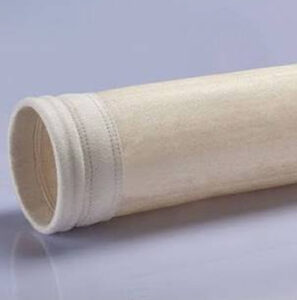
What Is Nomex Filter Bag? A Beginner’s Complete Guide
A dust collector can look ordinary from the outside while…
Read More →

Two suppliers can quote the same “Nomex bag” and still offer very different solutions. One may simply match a size; the other may ask about temperature spikes, dust chemistry, cleaning pressure, airflow, and failure history first. A nomex filter bag step by step selection process should test seven things: application understanding, media knowledge, customisation, quality control, technical support, proof of fit, and operating value.
The first sign of a capable Nomex filter bag agency is not a polished quotation. It is a detailed conversation.
A supplier should ask for normal and maximum temperature, dust type, moisture, chemical exposure, airflow, collector model, cleaning method, bag dimensions, cage condition, and recurring failures.
That information matters because fabric-filter performance depends on more than fabric alone. The US EPA identifies pressure differential, inlet temperature, gas flow, cleaning-system operation, and fan current among useful indicators of baghouse performance.
One of the simplest nomex filter bag tips is this: be cautious when a supplier recommends a bag before understanding the process.
Ask the supplier to explain why Nomex suits your application and, equally important, when it does not.
ClipOn Nomex filter bags are specified for continuous operation up to 200°C and short-term peaks up to 250°C. Yet temperature is only one part of selection. Moisture, chemistry, abrasion, and excursions can change what works best.
Try a practical question: “Our normal temperature is 175°C, but startup can briefly reach 215°C. What else do you need to know?”
A strong partner should ask follow-up questions rather than approve the material from two numbers alone.
Do not evaluate suppliers only with generic questions. Give each shortlisted company the same actual problem.
For example, say 18 bags were replaced early, 12 showed abrasion near the same section, and differential pressure has been recovering more slowly after cleaning.
Does the supplier immediately sell replacements, or ask about cages, inlet distribution, cleaning settings, and damage location?
In these nomex filter bag examples, 12 out of 18 failures share a pattern—about 67%. That does not prove the cause, but it should trigger investigation before repeating the same specification.
“Custom” should mean more than changing bag length.
Ask what can be adapted: diameter, length, top and bottom construction, finish, coating, membrane, seams, and collector-specific details. Donaldson notes that industrial fabric filter bags are available in multiple diameters, lengths, configurations, materials, and finishes for different process requirements.
ClipOn also offers Nomex filter bags in customised sizes and with coating or PTFE membrane options.
Every modification should solve an identified need across the entire operating cycle.
A sample that looks correct says little about consistency across a production order.
Ask how incoming media is checked, how dimensions are verified, how stitching and seams are inspected, and how finished bags are checked before dispatch. Put critical specifications into the purchase requirement instead of relying on verbal understanding.
This is where nomex filter bag best practices move from maintenance into procurement.
Also ask about repeat orders. Can approved dimensions and construction be reproduced consistently months later?
A filtration partner should still be useful after the invoice is paid.
Ask what happens when bags fail early. Will the supplier review photographs, operating data, removed samples, or failure location? Can technical staff help distinguish media problems from installation, cage, cleaning, airflow, or process issues?
EPA maintenance guidance emphasises addressing the cause of a fabric-filter problem rather than merely treating its symptom.
The best response to “our bags are failing” is not automatically “order more bags.”
Put final quotations side by side, but add four columns: maintenance demand, installation implications, technical support, and replacement risk.
Consider a simple scenario. Supplier A costs 10% less but offers generic construction and limited troubleshooting support. Supplier B costs more but validates dimensions, reviews operating conditions, and supports failure analysis. The cheaper quotation is only better if the operating outcome supports it.
Your purchasing team does not need a complicated financial model. It needs enough information to avoid choosing on unit price alone.
Before approval, ask: Do they understand our process? Can they explain why Nomex fits? Did they investigate failure history? Can they customise construction? Is quality control clear? Will they support troubleshooting? Does the commercial offer make sense beyond price?
That is the practical nomex filter bag step by step method.
Choosing the right “agency” is really choosing the right filtration partner—one that can connect media, construction, process conditions, and maintenance reality.
Ready to compare suppliers with better questions? Explore ClipOn’s fabric filter bag manufacturing capabilities and discuss your operating conditions, collector dimensions, and filtration requirements before finalising your next order.
A dust collector can look ordinary from the outside while…
Read More →
A baghouse problem rarely begins when someone notices dust. It…
Read More →
A filter bag rarely fails with a dramatic warning. More…
Read More →