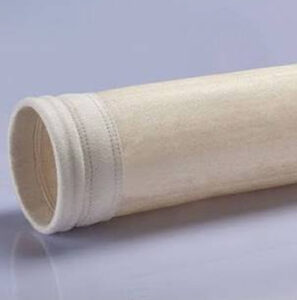
What Is Nomex Filter Bag? A Beginner’s Complete Guide
A dust collector can look ordinary from the outside while…
Read More →

Choosing an air filter manufacturer should begin with your operating problem, not a catalogue or the lowest quotation. The practical air filter manufacturer step by step method is to define the dust, airflow, temperature, pressure, equipment, maintenance issue, and performance target; shortlist manufacturers that understand those conditions; compare their engineering process, materials, customisation, quality checks, and support; then test the recommendation against lifecycle cost. The right partner will ask difficult questions before promising an answer. The wrong one will copy a size, offer a standard filter, and leave the plant to discover whether it works.
Many buying exercises start by collecting company names. That reverses the logic. A manufacturer cannot be judged properly until the plant knows what success means.
Create a one-page selection map with four columns:
The problem visible today
The operating condition behind it
The result the plant needs
The evidence a manufacturer must provide
For example, “bags clog quickly” is a symptom. The operating cause could involve dust behaviour, moisture, particle distribution, media finish, cleaning cycles, or air-to-cloth ratio. The required result might be steadier differential pressure and longer service life. The evidence should therefore include media reasoning, construction details, and a plan for reviewing performance after installation.
This map stops procurement from comparing unlike proposals.
A weak enquiry says, “We need 200 filter bags in this size.” A useful brief explains the environment in which those bags must survive.
Include what you know about:
Dust type and behaviour
Particle size or fineness
Normal and peak temperature
Moisture, oil, acids, or other chemical exposure
Airflow and pressure conditions
Cleaning method and cycle
Existing media and finish
Service life
Visible failure pattern
Equipment make, model, or housing dimensions
Required quantity and delivery priorities
Do not delay the enquiry because every value is unavailable. Share confirmed information, label estimates, and ask the manufacturer what else must be measured.
ClipOn’s plant-specific approach considers dust behaviour, airflow patterns, operating loads, pressure limits, particle-size distribution, temperature, and air-to-cloth ratio before developing a filtration solution. That is the level of discussion buyers should expect.
The first conversation is already part of the evaluation.
A serious manufacturer may ask why the existing filter is being replaced, whether production has changed, how differential pressure behaves, where damage appears, and whether dust release during cleaning is satisfactory. It may request photographs, samples, drawings, or operating records.
A quotation issued immediately after receiving dimensions is not automatically wrong. Standard replacements exist. However, when the plant has recurring failure, unusual dust, harsh chemistry, high heat, fluctuating loads, or imported machinery, a dimension-only response deserves caution.
One of the most useful air filter manufacturer tips is simple: score the quality of the questions before scoring the price. Good questions indicate that the company is trying to understand the system rather than force the application into an available product.
Filter media should never be presented as a mysterious brand code. The manufacturer should explain what the material contributes and where its limits matter.
ClipOn’s dust collector filter-bag range lists acrylic, aramid, glassfiber, polyester, polypropylene, PTFE, P84, and Ryton. Its cartridge-filter options include PPS, polyester, cellulose, and aramid.
Ask each shortlisted company:
Why is this fibre suitable for our temperature and dust?
What happens during peak conditions?
How does moisture or chemical exposure affect the recommendation?
What cleaning behaviour should we expect?
Which alternative media were considered, and why were they rejected?
It should connect material properties to the conditions you supplied.
Buyers often compare polyester with aramid or PTFE while overlooking the filter surface. Yet the finish can influence dust release, resistance to moisture or oil, chemical durability, and cleaning behaviour.
ClipOn lists finishes including egg-shell, silicone/graphite/e-PTFE combinations, acid-resistant, singed, glazed, oleophobic, fire-retardant, hydrophobic, and PTFE-membrane options.
The correct question is not, “Which finish is best?” It is, “What is the finish expected to change in our process?”
Request a plain-language explanation. A finish should address a defined challenge, such as difficult dust release, moisture exposure, oil, acid conditions, fire risk, or the need for a particular surface behaviour. Adding treatments without a process reason can increase cost without fixing the failure.
An air filter is not only its media. Construction determines whether it fits, seals, supports airflow, tolerates cleaning, and survives mechanical stress.
For filter bags, review diameter, length, cuff, snap-band or fixing arrangement, seam placement, thread, reinforcement, bottom design, and cage compatibility. ClipOn supplies cylindrical, cassette or enveloper, star, multichannel, and reverse-air baghouse formats, showing that geometry can change with the system.
For cages, ask about material, wire arrangement, joins, edges, coating, loading method, and corrosion exposure. ClipOn lists low-carbon steel, galvanized iron, and stainless steel 304/316, along with customised shapes, sizes, locks, and grip systems. Its cage construction includes rounded and polished edges intended to reduce abrasion against the bag.
For cartridges or panels, review pleat arrangement, support, frame, gasket, dimensions, and sealing.
“Custom” sometimes means changing a standard product’s length. True customisation can involve media, finish, shape, stitching, support, cage material, mounting, sealing, or the wider filtration setup.
This capability becomes important when a plant uses:
Legacy equipment
Imported machinery
A discontinued filter
A non-standard housing
A modified production process
A collector with repeated fit or leakage problems
ClipOn states that it reverse-engineers filters for legacy, custom-built, and imported systems. A reliable reverse-engineering process should examine more than the old sample because that sample may be worn, distorted, or based on a specification that was never right for current operations.
Ask how measurements are confirmed, how tolerances are recorded, and whether a prototype or limited run is appropriate before ordering.
A persuasive sales presentation cannot compensate for inconsistent production.
ClipOn describes its manufacturing process through four connected stages: selected procurement, precise production, application-specific coating and finishing, and final quality control. Use those stages as an audit framework.
Under procurement, ask how the correct media, metal, finish, and supporting materials are identified.
Under production, ask which dimensions and construction details are treated as critical.
Under finishing, confirm that the supplied treatment matches the approved specification.
Under quality control, ask what is checked before dispatch and what records accompany the order.
You do not need to demand confidential factory information. You do need enough visibility to know that the approved design can be reproduced across the quantity ordered and again during the next replacement cycle.
Industrial filtration are durable, efficient, high-performance, compliant, and premium. These words are starting points, not proof.
Turn every important claim into a verification question:
Efficient under which operating conditions?
Durable against which temperature, dust, or chemical exposure?
Tested using which method?
Compliant with which stated requirement?
Expected life compared with what current baseline?
Lower pressure drop at what airflow?
Custom fit verified in what way?
ClipOn’s products provide media, finishes, filter types, cage materials, panel-filter classes, and application information. When buying, request the current technical information relevant to the exact product being quoted.
This practice protects both parties. The manufacturer avoids being held to an assumption it never made, and the buyer receives a specification that can be reviewed objectively.
The lowest price per filter can create the highest annual cost.
Build a commercial comparison using:
Purchase price
Expected replacement frequency
Planned maintenance labour
Emergency maintenance exposure
Cleaning demand
Fan or blower load
Disposal and inventory requirements
Production interruptions
Risk to equipment, air quality, and emissions control
Technical support included
Suppose Manufacturer A offers a cheaper bag but provides no analysis of recurring clogging. Manufacturer B proposes a different media finish, reviews cleaning conditions, and includes a performance check. Even before outcomes are known, the quotations are not equivalent.
The purpose of lifecycle costing is not to justify the most expensive option. It is to identify which proposal has the clearest connection between engineering decisions and operating value.
Post-purchase support should be defined while the supplier is competing for the order.
ClipOn presents support across the filtration lifecycle through system audits, customised retrofits, proactive maintenance planning, performance reviews, troubleshooting, and engineering assistance.
Ask practical questions:
Who reviews a failure?
What information will be needed?
Can the team inspect the existing system?
Are retrofit recommendations available?
How are maintenance changes documented?
Will performance be reviewed after installation?
What happens when plant conditions change?
A manufacturer does not control every variable in a dust-collection or air-handling system. Housing condition, leakage, cleaning settings, airflow distribution, maintenance, and production changes also influence results. Good support helps separate a filter issue from a system issue.
Use a weighted score to reduce personal bias:
Application understanding: 20 points
Media and finish reasoning: 15 points
Construction and fit: 15 points
Manufacturing and quality control: 15 points
Customisation and reverse engineering: 10 points
Evidence and documentation: 10 points
Lifecycle value: 10 points
Technical support: 5 points
Require written notes beside every score. A company receiving 18 out of 20 for application understanding should have demonstrated why. This prevents a polished presentation or familiar brand name from dominating the decision without technical substance.
Price can be reviewed separately after unsuitable proposals have been removed.
The buyer reports heavy dust loading and bag collapse. The manufacturer should examine media suitability, airflow, cleaning, bag dimensions, and cage strength. A complete proposal may involve both the bag and its support cage rather than stronger fabric alone.
The plant sees wear near contact points. The manufacturer should study dust abrasiveness, cage condition, sharp edges, alignment, bag movement, and construction. ClipOn’s cages use rounded, polished edges to help prevent abrasion, illustrating how a support component can affect bag life.
The facility needs greater filtration area without a much larger housing. Cartridge pleating, star-bag geometry, or another customised format may be considered, depending on the application. The manufacturer should explain the airflow, dust-loading, cleaning, sealing, and maintenance implications before recommending a format.
These air filter manufacturer examples show why product selection cannot be separated from system behaviour.
Pause the evaluation when a manufacturer:
Recommends one media for every condition
Ignores temperature peaks or chemical exposure
Will not explain the proposed finish
Copies a failed filter without discussing the failure
Uses compliance language without a specific product basis
Cannot describe manufacturing checks
Treats cages, seals, or supports as irrelevant
Promises fixed service life without reviewing conditions
Focuses only on initial price
Offers no route for technical review after delivery
A red flag does not always require immediate rejection. It requires a clearer answer before the order proceeds.
Following an air filter manufacturer step by step process changes the purchase from a price comparison into an engineering decision.
Begin with the plant problem. Build an application brief. Evaluate the questions asked. Challenge the media and finish recommendation. Inspect construction, customisation, manufacturing control, evidence, lifecycle cost, and support. Then score every shortlisted company using the same criteria.
The right manufacturer should make the decision clearer. It should explain how dust, airflow, pressure, temperature, equipment, cleaning, media, construction, and maintenance connect. It should also recognise when the filter alone is not the entire solution.
ClipOn’s advantage is this system-level approach. Its team combines application analysis with tailored filter bags, cages, cartridges, and panel filters, supported by reverse engineering, audits, retrofits, maintenance planning, and technical assistance.
Recurring clogging, high differential pressure, short bag life, leakage, or poor fit should not become routine purchasing problems.
Explore ClipOn’s dust collector filter bags and cages and share your dust conditions, temperature, airflow, current construction, equipment details, and failure pattern. ClipOn can review the application and help develop a filtration solution around the way your plant actually operates.
A dust collector can look ordinary from the outside while…
Read More →
A baghouse problem rarely begins when someone notices dust. It…
Read More →
A filter bag rarely fails with a dramatic warning. More…
Read More →