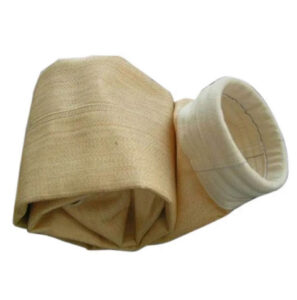
Inside a Nomex Filter Bag Campaign: A Step-by-Step Case Study
A filter bag replacement campaign can look successful on installation…
Read More →

A filter bag rarely fails on the day your maintenance calendar says it should. It gives clues first. Airflow becomes weaker. Cleaning cycles work harder. Differential pressure refuses to return to its range. Dust appears where it should not. Then, one day, what looked like a routine filtration component becomes a production problem.
That is why dust collector filter bag replacement should not be planned around a universal six-month, one-year, or three-year rule. The right replacement point depends on what the bags are experiencing inside your collector.
Instead of asking, “How old are the bags?” ask a better question: “Are they still filtering efficiently, cleaning properly, and protecting the process?”
Two identical filter bags installed on the same day can have different service lives when used in different plants.
Dust abrasiveness, operating temperature, moisture, chemical exposure, airflow, filtration velocity, cleaning frequency, dust loading, and filter media all influence how quickly a bag ages.
A polyester bag handling moderate, dry dust may remain dependable far longer than a bag exposed to abrasive particles, condensation, aggressive chemicals, or repeated temperature excursions.
So replacement frequency should be treated as an operating decision, not an expiry date.
Pressure drop naturally rises as dust accumulates on the filter surface. A healthy cleaning cycle should remove enough cake for resistance to fall again.
If differential pressure continues climbing or remains unusually high after cleaning, the media may be blinded, embedded with fine dust, or affected by moisture.
Do not replace immediately. First confirm that pulse valves, compressed air, controllers, pressure lines, hoppers, and airflow are functioning correctly. If the system is healthy and resistance remains high, the bags deserve closer inspection.
Visible outlet dust, increased particulate readings, or dust found in the clean-air plenum can indicate a torn bag, damaged seam, poor seal, or incorrect installation.
This requires investigation. Continuing to operate with compromised filtration can increase emissions and allow dust to affect downstream equipment.
Operators often notice declining performance before a filter looks damaged.
Capture at extraction points may weaken because air can no longer pass through loaded or blinded media efficiently. If fan and duct conditions have not changed, deteriorating bags may be contributing to the problem.
More frequent pulsing is not always better.
When bags need increasingly aggressive or frequent cleaning to maintain normal pressure, the system may be compensating for media that is no longer releasing dust effectively. Excessive cleaning can also add mechanical stress and compressed-air cost.
Look beyond holes.
Check for abrasion, glazing, stiffness, shrinkage, chemical attack, damaged seams, burns, wet dust deposits, poor cage fit, and wear where the fabric contacts the cage.
A damaged cage can shorten the life of a new bag, so inspect bags and cages as one filtration assembly.
A single damaged bag does not automatically justify replacing every bag in the collector.
If one filter has failed because of an isolated installation problem or local mechanical damage while the remaining bags are healthy, targeted dust collector filter bag replacement may make sense.
The decision changes when failures become repetitive.
Several bags showing similar abrasion, blinding, ageing, or chemical damage usually indicate a system-wide condition. Replacing individual bags repeatedly can become more expensive than planning a coordinated change-out during scheduled downtime.
Before ordering, identify why the previous bags reached end of life. Replacing the same specification without correcting the cause can simply restart the same failure cycle.
Premature failures often begin outside the filter itself.
Common causes include excessive temperature, condensation, corrosive gases, abrasive dust, incorrect air-to-cloth conditions, damaged cages, poor installation, ineffective cleaning, excessive cleaning pressure, and media that does not suit the process.
A process change matters too. Increased production, different raw material, higher dust loading, or altered airflow can turn a successful filter specification into the wrong one. These conditions should be reviewed before planning dust collector filter bag replacement.
The best dust collector filter bag replacement programme starts with records.
Track differential pressure, cleaning frequency, airflow behaviour, emissions, inspection findings, process temperature, unusual shutdowns, moisture events, and previous failure locations. Over time, those records reveal your collector’s replacement pattern.
They also make purchasing easier.
Before requesting replacement bags, document bag dimensions, top and bottom construction, cleaning method, dust characteristics, continuous and peak temperatures, moisture, chemistry, airflow, existing media, cage condition, and the problem you are trying to solve.
ClipOn provides dust collector filter bags in media including polyester, acrylic, aramid, polypropylene, PTFE, P84, glass fibre, and Ryton, together with specialized finishes for different operating requirements.
The goal is not to replace bags more often. It is to replace them at the right time with the right specification.
If your collector is showing pressure problems, reduced airflow, unusual emissions, or repeated bag failures, treat the next dust collector filter bag replacement as an opportunity to improve the system not simply renew it
A filter bag replacement campaign can look successful on installation…
Read More →
The cheapest filter bag can become the most expensive when…
Read More →
A filter bag rarely fails on the day the mistake…
Read More →