
Fluidising Fabrics: How Air Slide Fabrics Improve Powder Flow in Cement Plants
Cement powder can stop a production line without anything “breaking.”…
Read More →

A baghouse is designed to collect large quantities of fine dust in one enclosed space. That is exactly why static electricity deserves more attention than a small spark usually gets.
In the wrong process, dry particles moving through ducts, filters, and equipment can accumulate electrical charge. If combustible dust is present and an electrostatic discharge becomes an ignition source, the consequence can be far more serious than poor filtration.
That does not mean every plant needs anti static filter bags. The decision should reflect the dust hazard, operating environment, collector design, and how charge is controlled across the system.
Do not choose anti-static media simply because the powder looks fine or dry.
Begin with documented information about the material being collected. Dust from wood, grain, flour, sugar, coal, some plastics, chemicals, and certain metals can present combustible-dust hazards.
Risk depends on the material and process, so industry assumptions are not enough.
Review available safety data and, where required, use appropriate dust-hazard testing and a formal hazard assessment. Minimum ignition energy can help qualified specialists assess ignition sensitivity.
If the dust is not combustible and static is not affecting the process, anti-static media may add cost without solving a meaningful problem.
Combustible dust is only part of the decision.
Think about how the material travels. Pneumatic conveying, high-velocity airflow, particle-to-particle contact, and contact between dust and equipment surfaces can generate electrostatic charge. Dry environments may also make charge dissipation more difficult.
Now inspect the whole collection path rather than looking only at the bag.
Are conductive components properly bonded and grounded? Has the system been modified? Are flexible connections, ducts, cages, tube sheets, hoppers, and discharge equipment included in the electrical safety review? Is there evidence of static-related process behaviour?
Anti static filter bags can provide a conductive path for charge dissipation when they are correctly specified and integrated into a suitable grounded system. They cannot compensate for poor bonding, missing explosion protection, or an unsafe collector design.
A normal filter bag is selected primarily for filtration, temperature, chemistry, abrasion resistance, and cleaning performance.
An anti-static construction adds electrical conductivity to that job.
Depending on the design, conductive carbon fibres, stainless-steel fibres, conductive yarns, or other conductive elements may be incorporated into the felt or supporting structure. The purpose is to reduce charge accumulation and allow charge to dissipate through the intended electrical path.
This is important: “anti-static” should not be treated as a vague label on a quotation. Buyers should ask what conductive construction is being supplied, what electrical property has been specified, how it is verified, and how the finished bag interfaces with the collector.
Combustible powder handling: If the process collects a dust known or suspected to be combustible, electrostatic ignition should form part of the plant’s broader dust-hazard assessment.
Very dry operating conditions: Low humidity can favour static accumulation, especially when fine material is moving rapidly through equipment.
Frequent pneumatic transfer: Processes that convey powders through ducts can create repeated particle contact and charge generation.
A change in product or process: A collector previously handling one harmless material may later receive a finer, drier, or more ignition-sensitive powder. Filter selection should be reviewed whenever the duty changes.
None of these conditions proves that anti static filter bags are required. They are signals to involve qualified safety and filtration specialists rather than continuing with a standard replacement by habit.
This distinction may be the most important buying point in the article.
Anti-static media addresses one potential ignition mechanism: electrostatic discharge. A combustible-dust safety strategy may also require controls involving equipment location, bonding and grounding, ignition-source control, explosion venting or suppression, isolation, housekeeping, monitoring, and other measures appropriate to the assessed hazard and applicable regulations.
In other words, changing the bags does not make an unsafe baghouse safe.
OSHA identifies electrostatic discharge as one possible ignition source in combustible-dust operations and stresses properly designed, maintained, and grounded equipment. That system-level view is the right way to approach filter selection too.
A useful enquiry goes well beyond diameter, length, and quantity.
Provide the dust or product name, available hazard-test data, operating and peak temperature, humidity, gas chemistry, airflow, dust loading, cleaning method, collector model, current filter material, cage details, and the plant’s grounding arrangement. Explain whether the concern is a new hazard assessment, a process change, premature bag failure, or replacement of existing conductive media.
ClipOn supplies filter bags across multiple base-media and treatment options for different industrial conditions. For anti static filter bags, the right commercial conversation should therefore start with risk and compatibility, not simply price per bag.
Buy anti-static media when the assessed application requires conductive filtration. Skip it when it does not. The smartest specification is not necessarily the most elaborate one; it is the one that fits the actual hazard, collector, and process.
Cement powder can stop a production line without anything “breaking.”…
Read More →
A filter press can be perfectly sized and still disappoint…
Read More →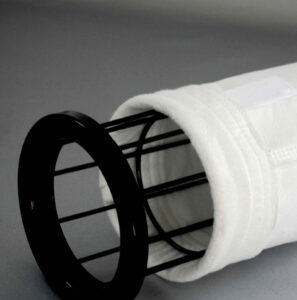
A failed filter bag is rarely just torn fabric. It…
Read More →