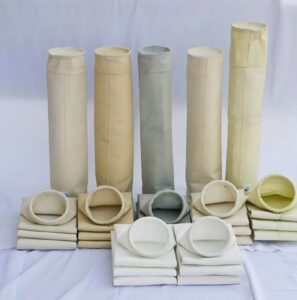
How to Choose the Right Filter Bag Material: Polyester vs PPS vs PTFE vs Aramid
The most expensive filter bag is not always the one…
Read More →

A dust collector problem can begin with a climbing differential pressure reading.
That number deserves attention.
Dust collector pressure drop tells you how much resistance air encounters as it moves through the filtration system. A rising reading can indicate loaded filter bags, ineffective cleaning, moisture, excess airflow, or changing process conditions. Ignore it, and the result may be weaker suction, higher energy demand, premature failure and lost production.
But high pressure drop does not automatically mean “replace the bags.” Troubleshooting starts with what changed.
Differential pressure measures the pressure difference between the dirty-air and clean-air sides of the collector. As dust collects on filter media, resistance naturally increases. Cleaning cycles remove part of that dust cake, allowing the reading to fall again.
The useful information is the pattern. A healthy collector develops its own operating range based on airflow, dust loading, filter media, cleaning method, and process conditions. Rather than chasing a universal number, compare current readings with the collector manufacturer’s limits and your historical baseline.
A reading that rises faster than usual, stays high after cleaning, or changes suddenly deserves investigation.
Fine particles can penetrate or lodge deeply in filter media until normal cleaning can no longer release them. Sticky dust, oil, condensation, and hygroscopic material can accelerate blinding.
The clue is persistence: cleaning cycles continue, but dust collector pressure drop barely recovers.
A filter bag cannot clean itself effectively if the pulse system is weak or inconsistent. Low compressed-air pressure, failed solenoids, damaged diaphragm valves, blocked lines, incorrect pulse timing, or moisture in the compressed air supply can all leave excess cake on the bags.
Check the cleaning system before blaming the media.
Moisture can turn otherwise manageable dust into a stubborn layer that adheres to fabric. Condensation may occur when gas temperature approaches the dew point, during startup or shutdown, or when humid air enters the process.
Once wet dust embeds into the media, repeated pulsing may make little difference.
Did production increase? Did the raw material change? Has a new pickup point been connected?
More dust entering the collector means more material reaching the filter surface. A system that previously operated comfortably may develop higher resistance if loading increases beyond its original assumptions.
Pressure trends should therefore be compared with production changes, not viewed in isolation.
Higher airflow pushes more air through the same filter area. That increases filtration velocity and can drive fine particles deeper into the media, making dust release harder.
Incorrect damper settings, fan changes, duct modifications, or process expansion can alter airflow enough to create a pressure problem even when filter bags are relatively new.
Before ordering filters, verify the measurement itself. Blocked pressure taps, leaking or kinked tubing, poor connections, or a faulty differential pressure instrument can create misleading readings.
A false alarm can trigger an unnecessary replacement.
High dust collector pressure drop rarely remains an isolated number.
Operators may notice weaker capture at hoods, dust escaping around process points, increased fan load, more frequent pulse cycles, longer equipment cleaning, or reduced process ventilation. Filters may also require attention sooner than expected.
The opposite matters too. An unexplained sharp drop in differential pressure can indicate damaged filter media, a disconnected bag, leakage, or another loss of filtration integrity. Trending both upward and downward changes helps maintenance teams spot abnormalities earlier.
Start with simple checks.
Confirm that the differential pressure reading is accurate. Then verify compressed-air pressure, pulse valves, solenoids, controller operation, and cleaning sequence. Inspect the hopper and discharge equipment so accumulated dust is not interfering with filtration.
Next, compare airflow and production conditions with normal operation. Look for moisture, process-temperature changes, unusual dust characteristics, or recent modifications to ductwork and fan settings.
If the system is functioning correctly but resistance remains high, inspect the filter bags. Look for embedded dust, glazing, chemical attack, shrinkage, abrasion, damaged seams, or poor fit around cages.
Do not simply increase cleaning pressure beyond equipment recommendations. Aggressive pulsing can shorten bag life without solving the underlying cause.
Sometimes pressure problems are not maintenance problems at all. They are application mismatches.
The wrong fibre, weight, surface treatment, permeability, or construction can struggle to release a particular dust. In those cases, repeatedly replacing like-for-like bags simply resets the problem.
ClipOn supplies industrial filter bags across different media and finish options for varied temperature, chemical, moisture, and dust conditions. When reviewing persistent dust collector pressure drop, provide operating temperature, dust type, gas composition, moisture conditions, airflow, cleaning method, current differential-pressure trend, and details of the existing bags.
Pressure drop is not just a maintenance reading. Read correctly, it is the collector telling you where to look next.
The most expensive filter bag is not always the one…
Read More →
What happens when filtration engineers, boiler operators, and maintenance leaders…
Read More →
The hottest filtration story of 2026 is not a new…
Read More →