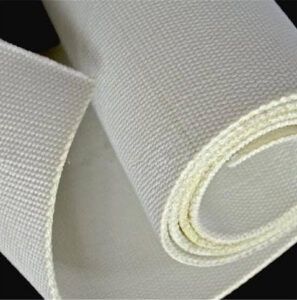
Fluidising Fabrics: How Air Slide Fabrics Improve Powder Flow in Cement Plants
Cement powder can stop a production line without anything “breaking.”…
Read More →

At 2 a.m., when a boiler temperature climbs and the stack monitor starts drifting, filtration theory becomes a decision. In a high temperature filter bags comparison, heat-resistant fabric bags perform better for fine particulate control because they combine strong dust capture with dry product recovery and media selected for hot, corrosive gas. Traditional methods still have value: cyclones handle coarse dust, wet scrubbers cool and wash difficult streams, and electrostatic precipitators manage very large gas volumes. The best answer depends on particle size, chemistry, temperature stability, utilities, maintenance capacity, and emission targets.
High-temperature filter bags work inside a baghouse. Dust-laden gas passes through heat-resistant fabric, particles build a cake on the surface, and cleaned gas exits. Shaker, reverse-air, or pulse-jet systems remove excess cake. The US EPA reports that fabric filters generally achieve collection efficiencies above 99%, including small micrometre and submicrometre particles, largely because the accumulated dust cake becomes the filtering layer.
Cyclones use centrifugal force. They are simple, dry, and rugged, making them useful as pre-cleaners before a baghouse. Their weakness appears as particles get smaller. EPA guidance says high-efficiency single cyclones may achieve 80–99% for total particulate matter, but only 20–70% for PM2.5.
Wet scrubbers bring dirty gas into contact with liquid. Most systems exceed 95% particulate collection, and some can address acid gases as well. Greater capture of small particles normally requires higher energy. Operators must also manage liquid flow, corrosion, plugged nozzles, mist elimination, blowdown, and contaminated water.
Electrostatic precipitators, or ESPs, electrically charge particles and collect them on plates. They suit large industrial gas streams, but performance is influenced by particle resistivity, size distribution, gas flow, and rapping behaviour. A change in fuel or ash chemistry can therefore change results without any obvious mechanical failure.
For consistently fine dust, high-temperature bags have the clearest advantage. Once a stable cake forms, surface filtration can capture particles that pass more easily through a cyclone. This makes baghouses attractive for cement kilns, boilers, metal processing, incineration, and other processes with particulate limits.
A cyclone may improve the system by removing sparks, larger particles, or heavy abrasive loading before gas reaches the bags. The smarter comparison is often not “baghouse or cyclone,” but “baghouse alone or cyclone plus baghouse.”
Traditional polyester bags are economical but unsuitable when gas remains beyond their practical thermal range. High-temperature media extend the operating window. ClipOn identifies fiberglass and P84 options up to 260°C, aramid around 204°C, and PTFE for continuous operation up to 260°C in suitable applications.
Temperature rating alone cannot decide the winner. Moisture, acids, alkalis, oxygen, abrasion, and temperature spikes may eliminate an otherwise suitable fibre. One of the most useful high temperature filter bags tips is to compare continuous temperature, peak temperature, and dew point separately. A bag can survive heat yet fail after acidic condensation blinds or weakens it.
Wet scrubbers can cool hot gas and handle certain combined particulate and gas-control duties, but they convert a dry emission problem into a liquid-handling responsibility. ESPs tolerate elevated temperatures with suitable design, although dust electrical properties remain important.
Baghouses create pressure drop, so fans consume energy to move gas through the media and dust cake. Poor cleaning or condensation increases that burden. However, collected dust remains dry, which can simplify disposal or allow recovery when the material has value.
Cyclones generally offer lower complexity and no filter media, yet their fine-particle limitation may require downstream polishing. Wet scrubbers can demand pumping energy and produce wastewater or sludge. ESPs may have low gas-side pressure drop, but require high-voltage equipment, controls, trained maintenance, and installation space.
The winning technology is the one whose supporting systems your plant can operate reliably, not the one with the most impressive brochure efficiency.
Consider a spent-wash-fired boiler producing corrosive gas and abrasive particulate. A chemically compatible fiberglass, P84, aramid, or PTFE bag may provide fine-particle control, provided temperature and chemistry are verified.
In a cement process with heavy coarse dust, a cyclone ahead of high-temperature bags can reduce abrasive loading while the bags complete fine filtration.
For a stream containing fine particulate plus a soluble acid gas, a scrubber may be preferred or combined with another control stage. The decision depends on water availability, corrosion management, discharge treatment, and permit requirements.
Choose high-temperature filter bags when fine particulate capture, dry dust handling, adaptable media, and compact modular filtration are priorities. Choose cyclones for coarse pre-separation, wet scrubbers when liquid-based cooling or gas absorption is valuable, and ESPs for suitable high-volume applications where dust resistivity is predictable.
Do not compare purchase prices alone. Evaluate emissions performance, fan or pump energy, water use, waste handling, media replacement, downtime, maintenance skills, and process variability.
For severe boiler conditions, review ClipOn’s high-temperature boiler filter bag solutions and discuss the gas temperature, chemistry, dust abrasiveness, cleaning method, and equipment dimensions before selecting media.
Cement powder can stop a production line without anything “breaking.”…
Read More →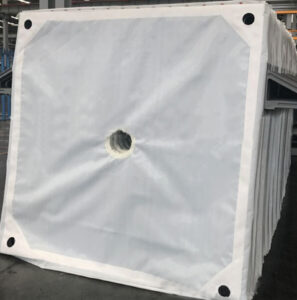
A filter press can be perfectly sized and still disappoint…
Read More →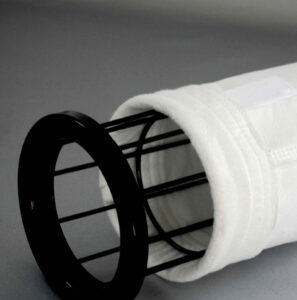
A failed filter bag is rarely just torn fabric. It…
Read More →