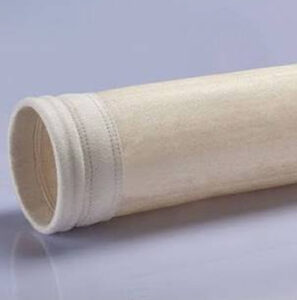
What Is Nomex Filter Bag? A Beginner’s Complete Guide
A dust collector can look ordinary from the outside while…
Read More →

Choosing a dust collector filter bags agency or, more accurately, a filtration supplier requires more than comparing prices. The dust collector filter bags step by step selection process is to prepare a process brief, shortlist relevant suppliers, test how they diagnose the application, compare written specifications, verify manufacturing controls, evaluate commercial value and agree on acceptance criteria. The right partner should explain why a particular media, finish, construction and cage arrangement suit your collector. This guide helps buyers separate useful technical support from impressive claims that do not answer the plant’s real problem.
A request reading “500 polyester bags required” tells suppliers what was purchased before, not whether it remains correct.
Prepare a brief covering the dust source, particle behaviour, operating hours, normal and peak temperatures, moisture, gas chemistry, airflow, cleaning method and current problem. Add collector drawings, bag and cage dimensions, pressure trends and failure photographs.
State the outcome being investigated. Is the plant addressing abrasion, difficult dust release, condensation, poor fit, visible leakage or cage damage? A clear brief gives every bidder the same starting point.
If data is unavailable, say so. A reliable supplier should identify missing information instead of filling gaps with convenient assumptions.
A long client list does not prove experience with your conditions. Ask for examples involving comparable dust, temperatures, cleaning systems or failure modes.
Relevant dust collector filter bags examples might include an aramid application in elevated-temperature mineral processing or a moisture-resistant configuration for a chemical process. The example should explain the challenge, selected construction and verification method without exposing confidential information.
Check whether the supplier can provide the necessary dimensions, attachment styles, media, finishes and cages. ClipOn lists cylindrical, cassette or envelope, star and multi-channel bags, along with multiple media and finishes. Availability should still be confirmed for each order.
Give every shortlisted team the same plant scenario and ask them to explain their reasoning.
Useful questions include:
Strong answers explain trade-offs and acknowledge uncertainty. Be cautious when a supplier recommends premium media immediately, guarantees service life without operating data or treats every pressure problem as bag failure.
One of the most valuable dust collector filter bags tips is choosing the team that asks the best questions, not the one giving the fastest answer.
Quotations cannot be compared fairly when one says “high-temperature bag” and another provides full construction details.
| Evaluation field | What the proposal should state |
| Filtration media | Material and construction |
| Bag design | Shape, dimensions and attachments |
| Finish | Proposed option and purpose |
| Operating basis | Temperature, dust and chemical assumptions |
| Cage compatibility | Size, material, finish and fit |
| Quality evidence | Agreed inspection records |
| Delivery scope | Quantity, packaging, spares and lead time |
| Commercial terms | Price, freight and payment terms |
Do not award points for unsupported words such as “best,” “advanced” or “zero maintenance.” Score what can be checked.
A capable supplier should explain what happens between approved drawing and dispatch.
Ask how incoming media is identified, dimensions are controlled, seams are inspected, finished bags are labelled and non-conforming products are handled. For cages, ask how straightness, weld quality, sharp edges and material specifications are checked.
Required evidence depends on the application and agreement. It may include dimensional reports, material identification, batch traceability, photographs or upstream certificates. Never assume a certification covers the exact product because its logo appears in marketing.
For a significant order, consider approving a drawing or sample before full production. A sample confirms construction and fit, but not months of process exposure.
Unit price is only one number. Add freight, installation labour, cage replacement, planned downtime, spares and disposal. Consider how lead time and inventory affect the plant.
An illustrative score could be:
These percentages are examples, not an industry standard. A critical application may give greater weight to technical evidence.
Dust collector filter bags best practices require like-for-like comparisons. A lower price means little when media construction, finish, cage scope or documentation differs.
Specify the approved drawing, tolerances, quantity, packaging, identification, inspection documents and process for resolving discrepancies.
Also define plant-side verification. On arrival, check labels, dimensions, attachment construction, visible damage and quantity. During installation, record bag locations. After a safe restart, capture readings under comparable conditions.
Plant performance also depends on airflow, cleaning controls, compressed-air quality, hoppers, cages, seals and process conditions. A fair review separates product conformity from system-level causes.
The strongest partner is not the one making the longest promise. It is the one whose recommendation can be traced from process data to material choice, construction, inspection and commercial scope.
ClipOn offers dust collector filter bags in multiple media, finishes and configurations, supported by compatible filter cages for varied industrial environments. Discuss Your Dust Collector Filter Bag Requirements with process data and collector details ready for a focused technical conversation.
A dust collector can look ordinary from the outside while…
Read More →
A baghouse problem rarely begins when someone notices dust. It…
Read More →
A filter bag rarely fails with a dramatic warning. More…
Read More →