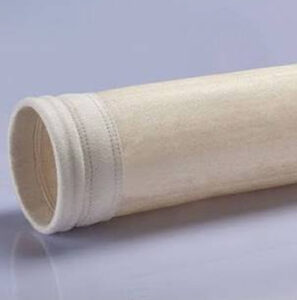
What Is Nomex Filter Bag? A Beginner’s Complete Guide
A dust collector can look ordinary from the outside while…
Read More →

An air filter manufacturer campaign is not an advertising exercise. It is a coordinated project that takes a plant from recurring filtration trouble to a better-specified, manufactured, installed, and monitored solution. This reconstructed air filter manufacturer case study begins with a baghouse facing abrasive dust, high temperatures, and production disruption, the challenge described in ClipOn’s published Case Study CS-062523. Because the public source does not disclose confidential results or a complete intervention log, the stages below apply ClipOn’s published engineering process to that documented scenario. The lesson is simple: filters improve when the manufacturer studies the process behind the failure, not only the dimensions of the failed bag.
The plant team did not begin with a dramatic breakdown. The warning signs accumulated.
Dust loading was abrasive. Operating temperatures were high. The baghouse had been struggling for several weeks, and the problem was beginning to affect production. That is the situation recorded in ClipOn’s resource listing for Case Study CS-062523.
This matters because industrial filtration problems rarely stay inside the collector. A filter issue can influence airflow, cleaning demand, maintenance workload, equipment stress, dust control, and the production schedule around the system.
The plant could have sent an old bag to a supplier and asked for an identical replacement. Instead, the campaign treated the failed bag as evidence. The aim was not to produce another version of the same component. It was to understand what the baghouse was asking the filter to survive.
Before recommendations were discussed, the project was framed around four questions:
What was happening to the existing filters?
Which operating conditions were driving that behaviour?
What filter and cage features could address those conditions?
How would the plant know whether the new selection was performing better?
This framing kept the campaign practical. “Improve filtration” was too broad. The team needed to identify the links among abrasive particles, temperature, filter surface, airflow, support cages, cleaning, and production interruptions.
ClipOn’s engineering approach considers dust behaviour, particle-size distribution, airflow patterns, operating loads, pressure limits, temperature, and air-to-cloth ratio. Those inputs became the campaign’s investigation map.
Plant complaints are useful, but they are not yet a specification.
“Bags fail quickly” can mean abrasion, chemical attack, excessive heat, poor fit, damaged cages, unsuitable cleaning, or several problems working together. “The collector is choking” can point to high dust loading, poor dust release, insufficient filtration area, leakage, or pressure behaviour.
The first stage translated observations into questions that could guide design:
Where did wear appear on the bags?
Was damage concentrated near cage contact points?
Did pressure rise steadily or after specific production events?
Were temperature peaks different from the normal operating range?
Did dust release properly during cleaning?
Had throughput, raw material, or process moisture changed?
Were cages straight, smooth, and correctly sized?
Were bags sealing and seating consistently?
This is one of the most useful air filter manufacturer tips for any plant: record the pattern, not only the failure date. Location, timing, appearance, and operating context can reveal more than a bag sample alone.
The campaign next divided causes into two groups.
The first group concerned the filter itself: fibre, felt weight, surface treatment, permeability, seam construction, dimensions, cuff, bottom design, and compatibility with the cage.
The second concerned the system around it: air-to-cloth ratio, airflow distribution, cleaning pulse, cage condition, housing leakage, dust loading, temperature variation, and maintenance practice.
That distinction prevented a common mistake. A new material cannot repair a bent cage. Stronger stitching cannot correct unsuitable airflow. A surface cannot compensate indefinitely for an overloaded collector.
ClipOn describes air-to-cloth ratio as the amount of air pushed through each square metre of filter fabric. Its published guidance explains that excessive ratio can drive dust into the media and increase abrasion. In a high-dust case, that relationship deserves investigation before the manufacturer simply upgrades the fabric.
Once the operating picture was clearer, the campaign moved to media selection.
ClipOn’s filter-bag portfolio lists eight media families: acrylic, aramid, glassfiber, polyester, polypropylene, PTFE, P84, and Ryton. The range is important because no single fibre is suitable for every combination of heat, abrasion, moisture, chemicals, and cleaning.
For this campaign, the shortlist had to address two dominant conditions: abrasive dust and high temperature. The manufacturer therefore needed to discuss more than a headline temperature limit. Repeated peaks, gas chemistry, moisture, mechanical movement, dust release, and cleaning energy could all influence the final choice.
The team used three questions to challenge every option:
What failure mechanism does this material address?
What new limitation could the material introduce?
Which operating evidence would confirm that it is working?
That final question turned material selection into a testable decision instead of a brochure comparison.
A fibre provides the base capability. The surface determines how dust meets the filter.
ClipOn lists nine finish options across its bag range: egg-shell, tricomponent silicone/graphite/e-PTFE, acid-resistant, singed, glazed, oleophobic, fire-retardant, hydrophobic, and PTFE membrane.
The campaign did not treat this list as a menu of upgrades. Each finish had to earn its place by solving a defined problem.
A smoother or membrane-based surface may change dust release and help prevent particles from embedding deeply. A hydrophobic or oleophobic treatment addresses a different exposure. Acid resistance matters only when the process chemistry requires it. Fire-retardant construction answers another risk entirely.
This is where air filter manufacturer best practices differ from product upselling. Good engineering narrows the design. It does not add every available feature.
The baghouse filter bag receives most of the attention because it is visibly dirty and often visibly damaged. The cage is easier to overlook.
That would have been a mistake in an abrasive environment.
ClipOn describes the cage as the structural backbone of the bag system. Its available materials include low-carbon steel, galvanized iron, and stainless steel 304/316, with custom shapes, sizes, finishes, locks, and grip arrangements. The company also highlights rounded edges, internal welding, sturdy pans, and polished surfaces intended to reduce abrasion against the bag.
The campaign inspected cage geometry, straightness, joins, corrosion, sharp edges, and top and bottom fittings. It also reviewed whether the bag and cage dimensions allowed unnecessary movement.
This changed the discussion from “Which fabric is tougher?” to “How do the fabric and support behave together during airflow and cleaning?”
ClipOn offers five bag configurations such as cylindrical, cassette or enveloper, star, multichannel, and reverse-air baghouse bags.
The campaign did not assume that the existing geometry was automatically correct. Geometry affects available filter area, fit, support, airflow, cleaning behaviour, and installation.
A cylindrical bag may suit a conventional arrangement. A star bag increases surface area where space is limited. A multichannel design serves demanding airflow requirements. Reverse-air systems require their own coupling mechanisms and accessories.
The correct choice still depends on the collector. Changing geometry without checking housing clearances, support, cleaning, and air distribution can create a new problem.
The case-study lesson was not that one bag shape performs best. It was that geometry should be treated as an operating decision, not a drawing detail.
Engineering intent can disappear during production unless it is documented and checked.
ClipOn describes four manufacturing stages: procurement from selected vendors, precise production to customer requirements, application-specific coating and finishing, and final quality control before shipment.
For this campaign, the approved product record needed to capture:
Media and finish
Bag dimensions and tolerances
Cuff and bottom construction
Seam and stitching details
Cage material and geometry
Surface and edge requirements
Installation orientation
Inspection points
Batch and replacement references
These details made the design repeatable. That record also prevents later decisions from depending on memory, assumptions, or incomplete handovers between teams and shifts. They also gave procurement, maintenance, and the manufacturer a shared reference if the plant later reported a problem.
An air filter manufacturer case study is incomplete when it jumps from recommendation to result. Manufacturing control is the bridge between the two.
A produced bag can still be damaged before startup.
The campaign therefore treated installation as a controlled stage. Old components had to be removed without damaging the housing. Cages required inspection. Sealing surfaces needed attention. Bags had to be seated properly, supported without twisting, and protected from sharp contact.
The team also needed a clean baseline. Photographs, installed quantities, identification records, and initial operating observations would make later reviews more reliable.
ClipOn’s product information emphasises compatibility for top-loading and bottom-loading collectors and customised lock and grip systems. Those details support installation, but they must match the actual collector.
Rushing this stage would have weakened the campaign. When a new bag fails because of installation damage, the material may be blamed for a problem it never caused.
This case study does not publish confidential plant savings, emission readings, or filter-life figures. Inventing them would make the story more dramatic and less useful.
Instead, the campaign defined observable measures that a plant could track:
Differential-pressure trend
Stability of airflow
Cleaning frequency and behaviour
Visible emissions or dust escape
Location and rate of bag wear
Cage condition
Maintenance interventions
Production interruptions linked to the baghouse
Time between replacements
Condition of removed bags
The important word is trend. A single pressure reading says little without airflow, loading, and operating context. One intact bag does not prove the whole installation is healthy.
The campaign created a review rhythm so the plant could compare actual behaviour with the design assumptions.
A filtration campaign should not end when the shipment is accepted.
ClipOn positions its support across the system lifecycle through audits, customised retrofits, proactive maintenance planning, performance reviews, troubleshooting, and engineering assistance. That involvement is useful when a plant needs to distinguish normal ageing from recurring design or system issues.
During review, the team would ask:
Is pressure behaviour more stable?
Is dust releasing during cleaning?
Are wear patterns changing?
Are temperature and load still within the design basis?
Have cages or seals deteriorated?
Has production changed since installation?
Does the maintenance routine need adjustment?
Should the next batch retain or refine the specification?
This final loop turns a purchase into an operating programme. It also gives the manufacturer evidence for future improvement.
The campaign’s advantage was not one “miracle” material. It was the order of decisions.
The project began with the plant problem, separated filter and system causes, reviewed media and finish, brought the cage into the analysis, checked geometry, controlled manufacturing, planned installation, and defined monitoring before claiming success.
That sequence reflects ClipOn’s central theme: application-specific engineering supported by custom filter bags, cages, materials, finishes, reverse engineering, audits, retrofits, maintenance planning, and technical assistance.
For buyers, the practical difference is significant. A standard replacement answers, “What was installed before?” An engineered campaign answers, “What should be installed now, given the way the plant actually operates?”
This campaign offers several transferable lessons:
Diagnose before quoting.
Record normal and peak conditions.
Examine the failure pattern, not only the failed part.
Treat airflow, pressure, dust, heat, cleaning, and support as connected.
Make every material and finish answer a specific risk.
Inspect cages whenever bags show abrasion.
Document construction so the design can be repeated.
Protect filters during installation.
Track trends instead of isolated readings.
Review performance after startup.
Revisit the design when plant conditions change.
These air filter manufacturer best practices reduce guesswork. They also make conversations between plant teams, procurement, maintenance, and the manufacturer more precise.
The strongest lesson from this air filter manufacturer case study is that the solution was not simply a new bag. It was a disciplined campaign.
Abrasive dust and high temperature created the visible challenge. The response required investigation, system thinking, material selection, finish selection, cage review, geometry, controlled manufacturing, careful installation, and continued observation.
That approach does not promise that every baghouse problem disappears with one order. It does something more credible: it builds a defensible route from evidence to design and from design to measurable plant behaviour.
For plants facing repeat failures, that route is more valuable than another catalogue recommendation. It helps teams understand why the filter is changing, what the change is expected to achieve, and how performance will be reviewed.
Abrasive dust, high temperatures, rising pressure, recurring wear, poor fit, or frequent replacements are not just purchasing issues. They are signals that the application deserves a closer engineering review.
Explore ClipOn’s dust collector filter bags and cages. Share the current bag, cage details, dust behaviour, operating temperature, airflow information, failure pattern, and maintenance history. ClipOn can help assess the application, develop a tailored specification, and support the filtration system beyond delivery.
A dust collector can look ordinary from the outside while…
Read More →
A baghouse problem rarely begins when someone notices dust. It…
Read More →
A filter bag rarely fails with a dramatic warning. More…
Read More →