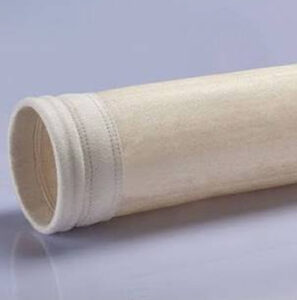
What Is Nomex Filter Bag? A Beginner’s Complete Guide
A dust collector can look ordinary from the outside while…
Read More →

A factory can produce thousands of filters and still be the wrong manufacturing partner. In 2026, good performance is measured before, during, and after production: how accurately the application is understood, how clearly materials are justified, how consistently the approved design is reproduced, and how effectively the supplier responds when conditions change. These air filter manufacturer benchmarks give buyers a practical standard for judging that performance. They are not universal pass-or-fail numbers. They are measurable signals showing whether a manufacturer is filling an order or engineering a filter around the system it must protect.
Think of manufacturer quality as a dashboard, not one efficiency percentage. A single number cannot explain whether a filter will fit, maintain airflow, release dust, tolerate temperature, survive cleaning, or remain repeatable.
A useful 2026 dashboard contains eight benchmark groups:
Application understanding
Design depth
Material and finish selection
Airflow and pressure awareness
Manufacturing consistency
Evidence and documentation
Lifecycle support
Continuous improvement
ClipOn’s dust-collection range includes eight filter-bag media families, nine listed surface finishes, five bag configurations, and three primary cage-material options. Its manufacturing story contains four control stages. The numbers show decision capacity; the benchmark is how correctly those choices are applied.
The benchmark story should also follow the filter through time. A proposal may look strong at quotation stage yet fail during repeat production, installation, or troubleshooting. That is why the measures below move in sequence: from the first application questions to design, factory control, evidence, field behaviour, and improvement. Together, they create a balanced view for procurement teams, plant managers, maintenance engineers, and environmental teams that need dependable performance rather than attractive claims alone in practice.
Good begins before the quotation.
A weak manufacturer prices from dimensions and quantity. A capable manufacturer builds an operating profile covering the dust, particle behaviour, temperature, moisture or chemical exposure, airflow, pressure limits, cleaning method, current filter life, equipment details, and the problem that triggered the enquiry.
ClipOn describes its process around dust behaviour, airflow patterns, operating loads, pressure limits, particle-size distribution, temperature, and air-to-cloth ratio. That is a stronger benchmark than asking only for a sample.
Track whether each critical field is confirmed, estimated, or unknown. Confirmed information comes from plant data, drawings, or inspection. Estimates should be labelled. Unknowns should trigger measurement or manufacturer guidance.
A good proposal keeps those categories visible instead of quietly turning assumptions into facts.
Material variety matters only when the selection logic is clear.
ClipOn lists acrylic, aramid, glassfiber, polyester, polypropylene, PTFE, P84, and Ryton for filter bags. Its cartridge filters use PPS, polyester, cellulose, or aramid media. The benchmark is not the size of the range. It is whether the manufacturer explains why one material suits the actual temperature, dust, moisture, chemistry, cleaning, and airflow conditions.
A written recommendation should answer four questions:
What operating risk does the material address?
Which peak condition limits it?
What alternative was considered?
What observation will indicate that it is working?
The fourth question turns a recommendation into a measurable engineering decision.
The filter surface influences dust release, penetration, moisture response, oil resistance, chemical durability, and cleaning behaviour.
ClipOn lists egg-shell, tricomponent silicone/graphite/e-PTFE, acid-resistant, singed, glazed, oleophobic, fire-retardant, hydrophobic, and PTFE-membrane finishes. Nine options matter less than one correctly justified treatment.
A good manufacturer links the finish to a defined problem. Hydrophobic treatment should answer moisture exposure. Oleophobic treatment should have an oil-related purpose. A membrane should be discussed in relation to surface filtration, dust release, pressure behaviour, and the application target.
“Premium finish” is not a benchmark. Documented function is.
Capture efficiency attracts attention, but the filter works inside an airflow system. Excessive resistance can weaken suction, increase cleaning demand, and raise fan or blower burden.
A strong manufacturer asks about airflow, air-to-cloth ratio, differential-pressure history, and pressure limits. ClipOn connects application-specific design with optimal airflow, lower pressure drop, reduced machinery stress, and lower blower load.
There is no universal pressure-drop target for every collector. Define three project-specific values instead:
Clean-filter baseline
Normal operating band
Investigation threshold
The manufacturer should explain what those values mean for the quoted filter and how they will be reviewed after installation.
Length, width, and diameter prove that a filter may fit. They do not prove that it will seal, clean, resist abrasion, or remain stable.
For bags, benchmark documentation may include cuff design, seam position, stitching, thread, reinforcement, bottom construction, tolerances, orientation, and cage clearance. ClipOn supplies cylindrical, cassette or enveloper, star, multichannel, and reverse-air baghouse configurations, showing that geometry changes with collector requirements.
For cartridges, the specification may address pleat arrangement, support, media area, end caps, gaskets, mounting, and overall dimensions. ClipOn states that custom cartridge sizes and complete filter systems can be designed and delivered.
Good manufacturers convert these details into an approved drawing or product record before production.
A correctly selected bag can still fail against a damaged or unsuitable cage.
ClipOn lists low-carbon steel, galvanized iron, and stainless steel 304/316 cage options. It also highlights custom shapes, locks, grip systems, rounded edges, internal welding, polished surfaces, and sturdy pans.
Measurable cage benchmarks include:
Correct diameter and length
Suitable material for corrosion and temperature
Straight wires and secure joins
Smooth contact surfaces
Compatible fittings
Controlled bag-to-cage clearance
Repeatable installation
When abrasion appears near contact points, include the cage in the review. Specifying tougher fabric alone may hide the mechanical cause.
Buyers should expect more than “quality checked.”
ClipOn describes four manufacturing stages: selected procurement, precise production, application-specific coating and finishing, and final quality control. This sequence creates a useful benchmark model.
Approved media, metal, thread, coating, gaskets, and supporting materials are identified before use.
Critical dimensions, seams, pleats, frames, cages, and construction details follow the approved specification.
The required treatment is applied and verified rather than assumed from a label.
Final checks are completed and the order is signed off before shipment.
Buyers do not need every factory record. They need confidence that the design approved in technical discussions is the product leaving production.
One successful batch is not enough. A strong manufacturer preserves the specification across replacements, revisions, and personnel changes.
Measure whether it maintains:
Approved drawings
Material and finish references
Revision history
Inspection requirements
Customer approvals
Batch or order traceability
Recorded design changes
This is one of the most overlooked air filter manufacturer tips. Purchasing descriptions often shrink until only a part number and quantity remain. With weak technical records, an improved filter can quietly revert to an older construction later.
Repeatability is part of performance, not administration.
Efficiency, durability, temperature capability, compliance, and service-life statements should be verifiable.
ClipOn’s panel-filter lists classes from G through M, F, E, H, and U categories, alongside EN, ISO, and ASHRAE references. Its cartridge mentions ClipOn quality practices and industry ISO, EN, and DIN norms. Buyers must ask which classification and standard apply to the exact quoted product.
A good evidence package identifies:
Product and construction tested
Applicable test or standard
Classification or result
Test conditions
Document date or revision
Limits of the claim
The benchmark is not the number of logos. It is the traceability of every important promise.
A single lifespan promise is attractive and often incomplete. Filter life changes with dust loading, abrasion, chemistry, temperature, airflow, cleaning, installation, cage condition, and maintenance.
Good manufacturers explain the design basis, variables that can alter life, and warning signs requiring review: rising pressure, unstable airflow, visible dust, localised wear, damaged cages, unusual cleaning, or changed conditions.
Air filter manufacturer examples show the difference. Stable ventilation may support scheduled replacement. Abrasive mineral dust needs condition-based review. A high-temperature collector requires attention to repeated peaks, not only average temperature.
The benchmark is realistic expectation setting, not the boldest guarantee.
The real test often begins after installation.
ClipOn positions lifecycle support around system audits, customised retrofits, proactive maintenance planning, performance reviews, troubleshooting, and engineering assistance.
Before ordering, agree on:
Who receives performance feedback
Which operating data should be shared
When the first review occurs
How failure will be investigated
Whether system audits are available
How revisions will be recorded
What maintenance guidance is included
A manufacturer cannot control every system variable. It should still help identify whether a problem comes from the filter, cage, housing, airflow, cleaning, installation, or changed process conditions.
Good in 2026 is not a static certificate. It is the ability to learn from plant performance.
Compare the new filter against the previous baseline using project-relevant indicators:
Differential-pressure trend
Cleaning frequency
Airflow stability
Wear location and rate
Visible dust or leakage
Maintenance interventions
Replacement interval
Filtration-related production interruptions
Not every number must improve immediately. Throughput, dust, temperature, and operating schedules can change results. The goal is to retain enough context to explain performance and refine the next decision.
This feedback loop turns manufacturer knowledge into plant-specific experience.
A good manufacturer does not need the largest factory or longest catalogue. It should consistently demonstrate five qualities.
First, it diagnoses before recommending. Second, it explains media, finishes, geometry, and support choices through operating conditions. Third, it converts that design into controlled, repeatable production. Fourth, it supports claims with product-specific evidence. Fifth, it remains involved long enough to learn from actual performance.
ClipOn’s aligns with this profile. Its model combines multiple media and finishes, custom bags and cages, cartridge and panel filters, reverse engineering, precision manufacturing, audits, retrofits, maintenance planning, and technical support.
That combination helps buyers benchmark the thinking behind the product, not only its price.
Air filter manufacturer benchmarks turn broad promises into observable behaviour.
Instead of asking whether a manufacturer is “good,” ask whether it builds an operating profile, justifies media and finishes, defines airflow and pressure expectations, controls construction, preserves repeatability, documents evidence, supports the filter after delivery, and learns from replacement-cycle data.
These benchmarks cannot remove every variable from industrial filtration. They reveal where assumptions enter the purchase and where stronger technical discussion is needed.
In 2026, good manufacturing is not defined only by the filter leaving the factory. It is defined by the decisions that created it and the support that follows it into operation.
Do not let cartridge selection end with dimensions and price. Use these air filter manufacturer benchmarks to question media choice, airflow resistance, construction quality, customisation, testing, and post-supply support.
Share your dust profile, airflow, operating temperature, space limits, pressure behaviour, and filtration target with ClipOn. The team can review your application and recommend a custom cartridge filter solution designed around the actual demands of your system for dependable plant performance.
A dust collector can look ordinary from the outside while…
Read More →
A baghouse problem rarely begins when someone notices dust. It…
Read More →
A filter bag rarely fails with a dramatic warning. More…
Read More →