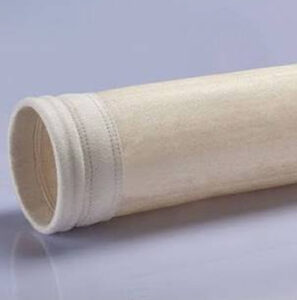
What Is Nomex Filter Bag? A Beginner’s Complete Guide
A dust collector can look ordinary from the outside while…
Read More →

Two identical-looking filters can produce different results. One arrives because a buyer copied the dimensions and repeated the order. The other is developed after someone studies the dust, airflow, temperature, pressure, cleaning cycle, and equipment limits. Which performs better? In an air filter manufacturer comparison, the engineering-led approach wins when operating conditions are demanding, changing, or already causing failures. Traditional replacement methods can work for stable applications, but they often repeat problems. The real contest is not factory-made versus handmade. It is informed design versus assumption-led replacement.
Traditional methods usually mean purchasing a standard filter from a catalogue, copying an existing component, selecting media from habit, or asking a fabricator to reproduce the visible shape. The decision is driven mainly by size, availability, and initial price.
A proven standard filter may remain suitable when the process and performance target have not changed. It becomes risky when the plant experiences clogging, leakage, high differential pressure, short service life, damaged cages, or inconsistent dust loads.
An engineering-led manufacturer begins elsewhere. ClipOn says it studies dust behaviour, airflow patterns, operational loads, pressure limits, particle-size distribution, temperature, and air-to-cloth ratio before designing a solution. That changes the purchase from reproduction to diagnosis.
Imagine one plant evaluating both routes. The current filter fits, but pressure rises quickly and bags need frequent attention. The traditional route sends the old sample for duplication. The manufacturer-led route asks why pressure is rising.
Both may look correct. Their performance separates during operation.
The visible symptom becomes the specification. If a bag is torn, the answer is a stronger bag. If it clogs, the answer is another bag. If it does not fit, dimensions are adjusted.
This may solve a purchasing error but miss the cause. A tear could result from cage abrasion, poor alignment, heat, or unsuitable cleaning. Clogging could involve moisture, sticky dust, excessive loading, or cleaning cycles.
The symptom becomes the first clue. The manufacturer reviews the filter and the conditions around it. ClipOn positions its design process around plant challenges such as clogging, high differential pressure, inefficient cleaning cycles, emissions control, high heat, and heavy dust loading.
Performance winner: the manufacturer-led route, because it separates product failure from system failure before recommending a change.
Media is chosen because it was used previously, is available, or appears affordable. Polyester may be reordered simply because the old bag was polyester.
Media is matched to heat, chemistry, moisture, abrasion, dust behaviour, and cleaning requirements. ClipOn lists acrylic, aramid, glassfiber, polyester, polypropylene, PTFE, P84, and Ryton among its filter-bag options. It also offers finishes including singed, glazed, acid-resistant, oleophobic, hydrophobic, fire-retardant, and PTFE-membrane constructions.
A manufacturer should explain what each material changes and where its limitations begin.
Performance winner: the manufacturer-led route in variable or harsh conditions. Traditional selection remains acceptable when the existing specification is proven and conditions are unchanged.
Airflow is where a cheap decision can become expensive.
The filter is judged mainly by whether it captures dust and fits. Resistance may receive little attention until suction weakens or the blower works harder.
Capture and airflow are considered together. ClipOn connects tailored design with lower differential pressure, optimal airflow, reduced machinery stress, and lower blower load. Its process considers air-to-cloth ratio, dust load, media layering, and construction.
A denser filter is not automatically better. If the system cannot move the required air through it, collection elsewhere can suffer.
Performance winner: the manufacturer-led route, because filtration efficiency matters only when the system maintains required airflow.
Traditional replacement often treats dimensions as the complete definition of fit. Yet two products with the same length and diameter can behave differently.
ClipOn supplies cylindrical, cassette or enveloper, star, multichannel, and reverse-air baghouse formats. It also provides custom cage shapes, sizes, materials, locks, and grip systems. These options connect construction to equipment geometry, airflow, cleaning, and support.
A manufacturer-led review can examine seams, cuffs, reinforcement, cage compatibility, sealing, frames, and support structures. Traditional reproduction may copy an outdated weakness.
Performance winner: the manufacturer-led route for non-standard, imported, modified, or legacy equipment. A standard method can work when the approved design is accurate and repeatable.
A good recommendation still has to survive production.
ClipOn describes its sequence as strong procurement, precise production, coating and finishing, and final quality control. Raw materials come through selected vendors, technical details are checked during production, finishes are applied for the requirement, and a final checklist is completed before shipment.
Traditional methods vary, but a low-information order gives little basis for checking beyond dimensions and workmanship.
The question is whether the approved specification is documented and reproduced consistently.
Performance winner: whichever route demonstrates material control, dimensional checks, construction consistency, and final inspection.
Industrial processes change. Production rises, moisture enters, temperatures spike, dust becomes finer, and equipment is modified.
Traditional replacement assumes yesterday’s filter remains correct. Manufacturer-led selection can revisit the application and alter media, finish, construction, support, or system settings.
ClipOn also offers reverse engineering for legacy, custom-built, and imported systems, alongside customised retrofits. This is valuable when the original component is unavailable or the old design no longer reflects current conditions.
Performance winner: the manufacturer-led route whenever operating conditions have shifted or the original specification cannot be confirmed.
Responsibility often ends at delivery. When performance drops, the plant orders another replacement or tries a different material.
The filter is treated as part of a lifecycle. ClipOn presents system audits, proactive maintenance planning, performance reviews, troubleshooting, and engineering support as part of its service model.
Housing leaks, cleaning settings, damaged cages, poor installation, and process changes can undermine a correctly produced filter. Technical support helps identify the responsible variable.
Performance winner: the manufacturer-led route where downtime is expensive and recurring failures require investigation.
Traditional methods often win the first price comparison. They may use familiar materials, simple construction, and limited engineering time.
The manufacturer-led route may require more data, customisation, or system review. Its value must be measured over the operating cycle.
Compare:
Purchase and installation cost
Replacement frequency
Cleaning demand
Maintenance labour
Blower or fan burden
Inventory requirements
Production interruptions
Troubleshooting support
Risk to emissions and equipment
A higher-priced filter is not automatically a better investment. A tailored proposal earns its value only when design decisions connect to longer life, steadier airflow, lower maintenance, or another measurable result.
Performance winner: undecided until lifecycle cost is calculated. Initial price alone cannot answer this round.
A facility has used the same approved panel filter successfully for years. Air volume, environment, and target performance are unchanged. A standard repeat order may be sensible.
The plant sees faster pressure increase after production changes. Copying old bags may preserve the problem. The manufacturer should review dust loading, temperature, air-to-cloth ratio, media, finish, and cleaning behaviour.
The original filter is discontinued, and a generic substitute fits poorly. Reverse engineering can examine dimensions, mounting, sealing, support, and operating conditions to create a suitable replacement.
These air filter manufacturer examples show that more uncertainty increases the value of engineering.
Use the traditional route when the specification is verified, performance is stable, conditions are unchanged, and the supplier can reproduce the product consistently.
Choose an engineering-led manufacturer when:
Filters fail repeatedly
Differential pressure is unstable
Dust or temperature has changed
Equipment is non-standard
Media selection is uncertain
Cages, seals, or supports may be involved
Energy or downtime costs matter
The plant needs audits, retrofits, or ongoing support
Ask every manufacturer to explain its recommendation plainly, without hiding guesswork.
ClipOn combines customised filtration products with application analysis and lifecycle support. Its portfolio includes dust collector filter bags and cages, cartridge filters, and panel filters, supported by multiple media, finishes, constructions, and custom dimensions.
Its differentiator is the connection between plant data, engineering choices, controlled manufacturing, audits, retrofits, maintenance planning, and post-delivery assistance.
That model matters when generic replacements fit physically but fail operationally.
The answer to an air filter manufacturer comparison is conditional but clear. Traditional methods perform well when the original specification is correct, the application is stable, and repeatability matters more than redesign. They are fast and practical for routine requirements.
An engineering-led air filter manufacturer performs better when the plant faces uncertainty, harsh conditions, changing loads, non-standard equipment, airflow problems, or recurring failures. It can investigate causes, select suitable media and finishes, refine construction, review the wider system, and support performance after installation.
The choice is repetition versus understanding. When the existing solution works, repeat it carefully. When it does not, stop copying the symptom.
Should you repeat the existing filter specification or reconsider the design entirely? The answer depends on how well the current filter handles your dust, airflow, temperature, pressure, cleaning cycle, and equipment conditions.
Share your existing filter details and performance concerns with ClipOn. Its engineering team can compare the current setup with the plant’s actual operating demands and determine whether you need a standard replacement, a customised filter, a reverse-engineered component, or a wider system improvement.
Request an application review from ClipOn and make your next filtration decision based on evidence rather than assumption.
A dust collector can look ordinary from the outside while…
Read More →
A baghouse problem rarely begins when someone notices dust. It…
Read More →
A filter bag rarely fails with a dramatic warning. More…
Read More →